


Hello sports fans. Welcome back to another edition of What’s Shaping Sports Culture, where I look at how sport is experienced, is marketed and it evolves. Today I share some thoughts on the increasing discourse around influencers and brand activations role at sport events, while the WSL kicks off with a new campaign.
WHAT’S SHAPING SPORTS CULTURE: THE LEAD
When every event is now trying to be its own cultural moment we can’t let the sport itself become the backdrop.
In the competition for sports fans’ attention and relevance, we’re seeing enough examples lately to suggest we might be needing an inflection point in how organisations and brands use influencers, creators and activations around major sporting events.
At the US Open, there is an influencer backlash happening as their behaviour has interrupted the playing and watching experience. Wimbledon have since said they’re putting influencer restrictions in place.
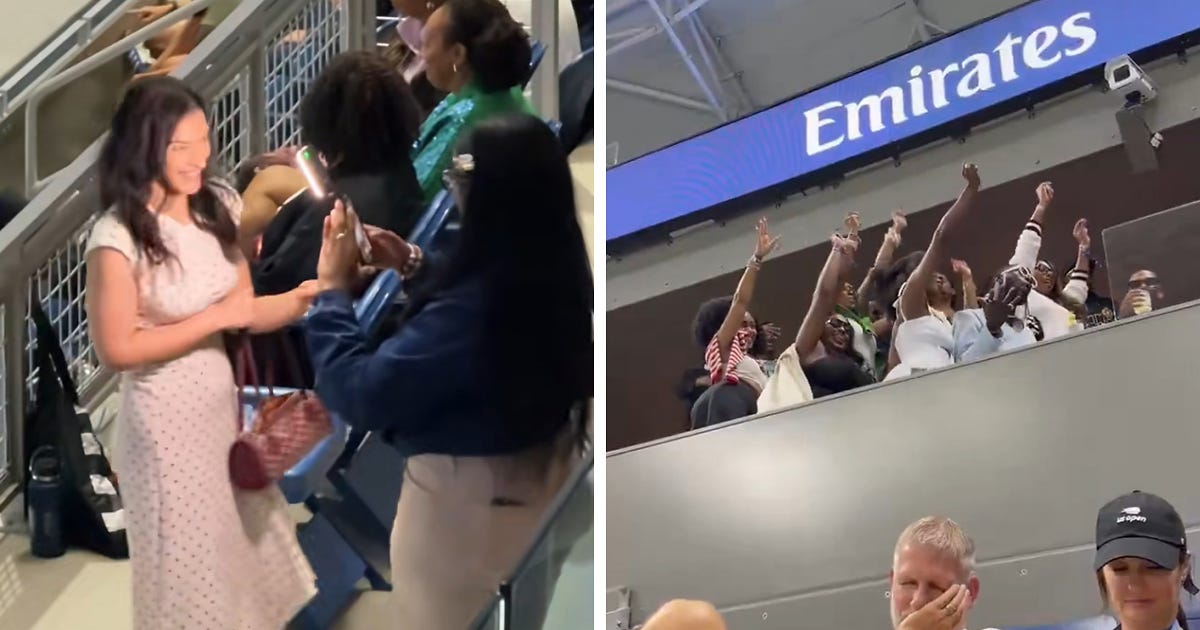
Jessica Schiffer’s great tennis newsletter Hard Court revealed how players were exhausted before play even got underway with multiple events to show up for and also expressed the US Open’s transformation into New York Fashion Week with a scoreboard.
It’s not the first time Fashion Week has been used to describe what happens around sport. Grace Cook made the comparison when writing about marathon culture for the FT in 2024 and returned to the deluge of brand activations surrounding this year’s London Marathon on her excellent Salty Substack.
Tensions surfaced at the Ultra-Trail du Mont-Blanc, where Chamonix has become overrun with pop-ups, social runs, product launches, influencers and brand experiences in a small town.
The World Cup was bloated with branded activations making attending feel like corporate Disneyland and people making content everywhere. The SuperBowl, NBA All-star weekends and NBA Europe games have turned into big creator brand trips where you can’t move for content being made.
This isn’t anti-influencers, creators or brand activations. My work sees me close to them and they all can play valuable roles in marketing.
It’s just starting to feel like sport is becoming the sideshow to the things around it being given more prominence: the food and drink on offer, what the hospitality experience looks like, which celebs or influencers are in the paddocks and suites, who is performing and what brands are activating. None of this is a bad thing in isolation when used in the right way.
Sport has broadened its appeal as it influences and becomes influenced by wider culture so we now have more pathways to become interested in sport through music, art, fashion, beauty, gaming and more. Influencers, creators and brand activations have a role to play here. The issue becomes when these things don’t amplify the sport or add to the experience and instead distract or disrupt the way sport is experienced, viewed and even how it’s played.
We need to keep the main thing, the main thing.
The competition for attention and relevance
Sport is one of the last monocultures and places where large crowds of people gather. As a result we’re seeing more money and resources than ever from brands going into reaching those people and looking to build cultural relevance, while sports leagues and teams look for ways to grow their fan and audience numbers. It feels like every brand or sponsor wants to have a presence at an event, but is giving less thought to what their presence means.
Are we amplifying what makes this sport great, so we can fuel its fandom?
Are we enhancing the experience for people attending, whether as a participant or spectator?
If we can’t answer either of those with a yes, it’s time for a rethink.
Access that gives value to both influencer, creator and audience
Influencers and creators can be a shortcut to building reach and relevance and it’s a given now for brands to work with them. In return influencers and creators want access the brands can give and the less accessible that experience is, the more valuable it can become for content, but access is becoming a contentious topic.
If creators and influencers are just showing that they’re at an event and you’re not, it starts to feel hollow. The influencers and creators don’t set the ticket prices, but you anger fans when they see influencers and creators show what an experience looks like that they are increasingly being priced out of, as has been happening at the US Open and World Cup.
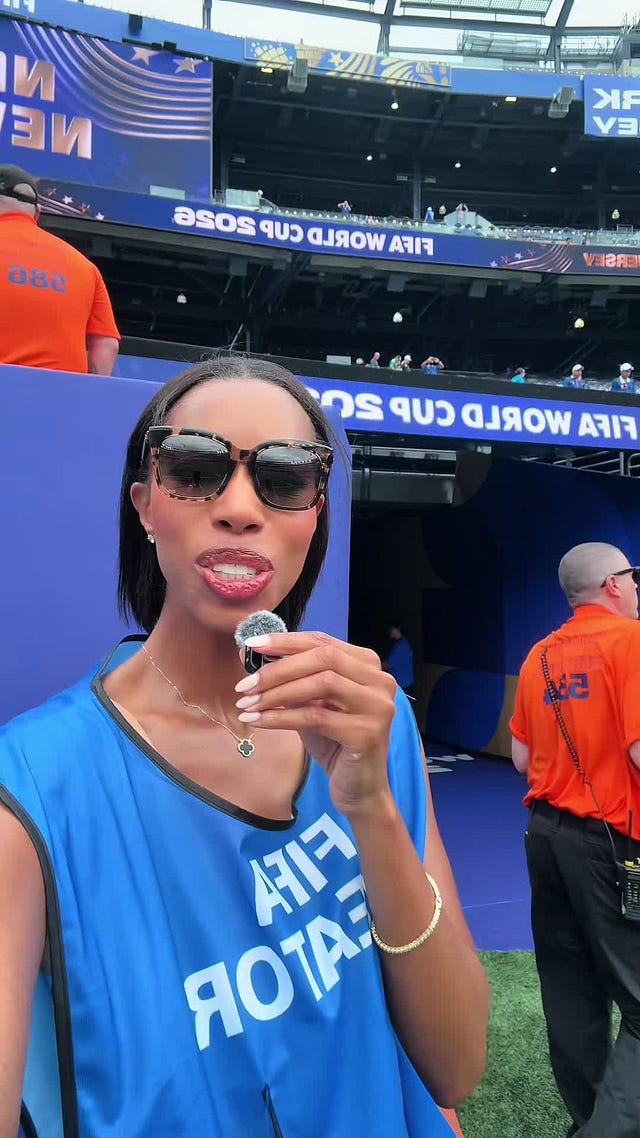
When creators and influencers use access to translate and amplify the sport it feels far more valuable. Christian Basnight uses his US Open credential to report from press conferences and become the “eyes and ears” for fans who can’t be there. Simone Scott took followers through training, bus arrivals and supporter sections to make the World Cup easier for less-established fans to understand.
 Tiktok failed to load.
Enable 3rd party cookies or use another browser
Activations that feel part of the experience, not an add on
Brand activations, when done well can feel like they’ve played a role in enhancing your experience of an event. It could be simple things like providing utility, as Chase does every year at the US Open by providing phone charger space. Will it win marketing awards? No. Is it super handy for attendees? Definitely. Same for Dove who have a dedicated Re(Set) area on the grounds where attendees can cool down and refresh, using Dove products. A great example of putting the product to work and showing its benefit in situ.
It could also be experiences that deepen your love and knowledge for the game, like Wilson’s Roger Federer Museum to coincide with his recent Hall of Fame induction. There was a new HoF range to be sold, but there was an experience around it. At the UTMB there were so many shakeout runs away from the main race, but the experiences that stood out were offering something different, like NNormal’s shakeout run that taught you something about what all the foot traffic is doing to the terrain around it. Or Shokz throwing a run for people to test their product and have a narrated track playing to support the experience.
Participants and spectators are increasingly having to run the brand activation gauntlet at events now, some feel more saturated and intense than others where space is limited like the UTMB. Craig Tiley, the USTA CEO, has stated he wants the US Open to become “Tennis Disneyland” so we’re only going to see an increase in activations and experiences provided by brands. The smarter brands might be ones who are more selective in where they show up, not seeing every event as a chance to sell and launch a product. The ones that do show up will be the ones putting participants and spectators first, thinking about what the participant or spectator needs that week or that day?
Showing up meaningfully
Sport is such an attractive proposition for brands and there’s so much money being spent on marketing activity now that things are becoming crowded, a little forced and mostly interchangeable. We have a responsibility to be more meaningful in how we show up here.
There’s so much to love about sport and what makes it special from what happens on the field or court and in the stands, to the culture that surrounds it. We’re seeing athletes do amazing things, while also getting to see them as human beings also. The breadth of fandom is exciting and interesting.
What does relevance really look like here? Is it some content capture to flood owned accounts and in the feeds? Or something more meaningful that can enhance someone’s knowledge and relationship with sport? The former feels like a short term hit that blends into the crowded feed, the latter feels like building something credible over time that you can become known for. I know which one looks more rewarding and interesting to work on.
ALSO CATCHING THE EYE…
HOW SPORT IS EXPERIENCED
A new Populous and YouGov Sport report outlines the opportunities for women’s football to shape stadiums and matchday experiences around the priorities identified by fans. The UK Women’s Football: Designing the Future of Matchday report was compiled by surveying 1,000 ‘Established’ and 1,000 ‘Potential’ fans and key findings show 48% of Established Fans who have attended a women’s international, have yet to attend a WSL match. 4 in 10 existing women’s football attendees describe themselves as casual fans, while only 15% attend matches at least monthly. The ‘experience gap’ is how design practice Populous, who delivered the new NWSL Denver Summit FC stadium, call the challenge facing women’s football clubs in converting high levels of interest in the game into regular, repeat attendance. The report delves into solutions for what matchday could look like when it is intentionally shaped to close that gap.
Another week, another ticket price controversy as tickets for next year’s home Ashes series goes on sale with big increases compared to the previous home series as well as recent England games. At Edgbaston, the cheapest tickets are £115 and in the famous Hollies Stand, it will cost £165, up from £125 in 2023. Some tickets for the tests at Lords and the Oval will cost as much as £190 and £185. This comes after the counties at all three of the aforementioned grounds sold 49% stakes in the respective Hundred franchises ranging from £40 million to £145 million.
Comedians and sports fans Alexis Guerreros and Christian Polanco of The Cooligans will provide alternative commentary for select MLS matches across Apple TV coverage.
We have more sports available to watch than ever, but it’s a struggle to find it. 19% of fans say it takes more than 10 minutes to locate the game they want, with 85% of fans in Gracenote’s research stating they’re interested in a centralised hub helping them find games.
HOW SPORT IS MARKETED
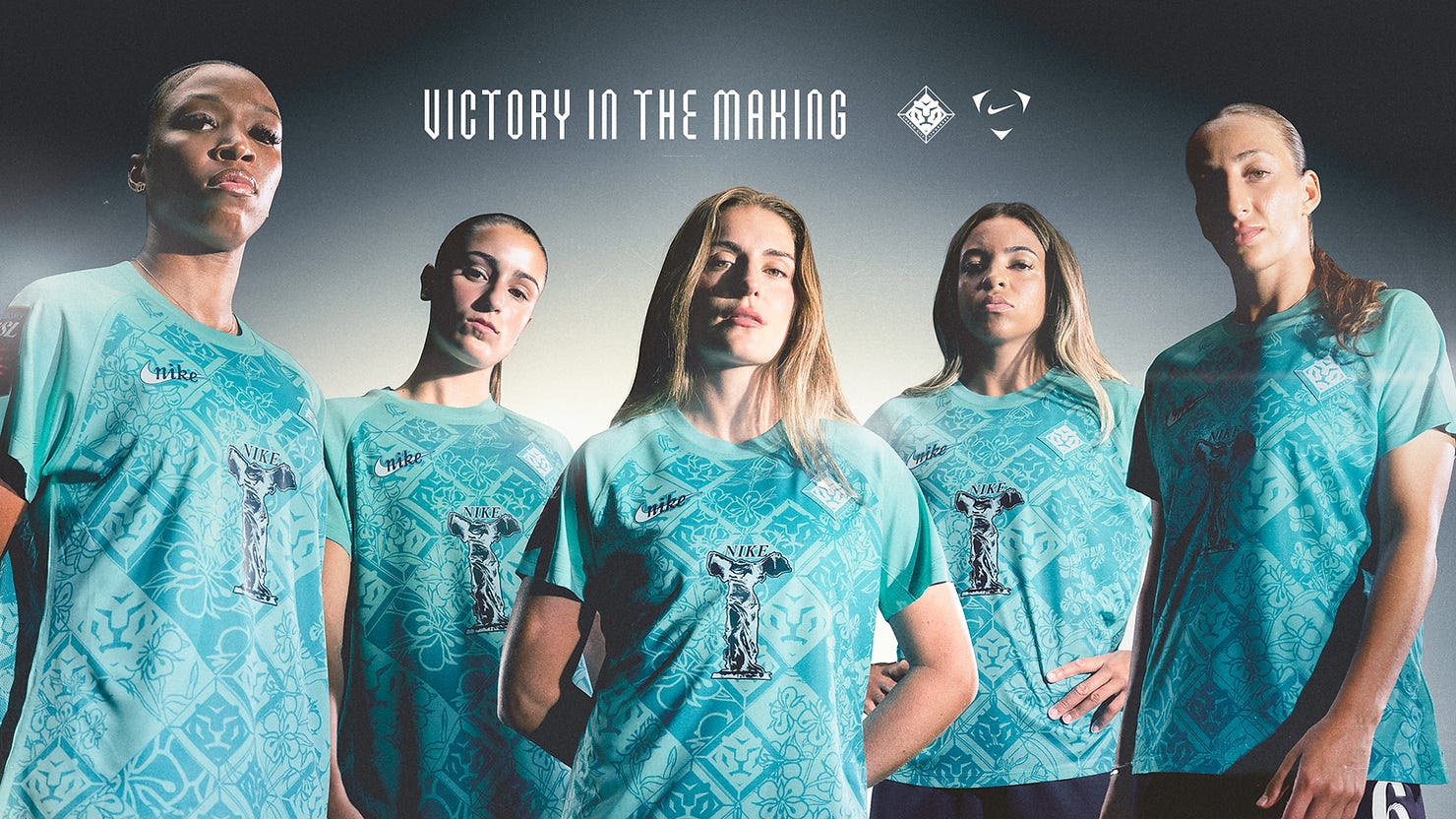
The London City Lionesses got off to a great start Friday, beating Manchester United after an eye-catching summer of transfer activity. In the lead up they also announced a multi-year first-of-its-kind Nike sponsorship where as well as being the kit supplier, they’ll also be a front of shirt sponsor too. The usual logo wordmark is replaced with the ancient Goddess of Victory and according to London City’s owner, Michele Kang, it is the largest sponsorship deal in the women’s game.
As part of the new season roll out this weekend, the WSL and Anomaly launched a social led campaign with 14 videos where the players from the leagues ‘intercept’ creators belonging to a wide range of social subcultures to showcase the league’s talent. Players include Alexia Putellas, Georgia Stanway, Khadija ‘Bunny’ Shaw, Jess Park, Ffion Morgan, Ruby Mace, Natalie Bjorn, Eden Sykes, Sophie Whitehouse and Ruby Mace. Some of the creators and talent includes JazHands, It’s Just Nife, Run and Eat with Jack, BMX rider Kye Whyte and Florrie Tyler.
The Chicago Cubs have launched a scripted rom-com series on their TikTok called ‘Nine Innings to Love’, that is created in-house and celebrates the magic of a summertime Cubs game aimed at BookTok fandom.
Vodafone and Borussia Dortmund have recreated the first ever Bundesliga goal scored by Timo Konietzka back on August 24, 1963, a goal never recorded at the time. This documentary shows how the goal was recreated with AI after leaning on eyewitness accounts, media reports and archival material. The goal’s recreating and retelling will now be exhibited at the German Football Museum.
Fanatics Football Town Hall sees a range of sports fan personas on display as Luke Wilson talks through the brand’s sports app and its fan rewards.
Nissan’s “Tell Them a Heisman Sent You” series rolls out for another season where previous trophy winners sell cars matched to their playing style across a series of content and activations.
HOW SPORT EVOLVES
As competition for athletes intensifies, the changing/locker room is becoming an important investment for teams with millions being spent on creating the best environment. USC’s new $225m football centre includes reclining recovery chairs, a barbershop and hot-cold therapy pools, while the Indiana Fever and New York Liberty are spending $78m and $80m respectively on facilities featuring private player “studios” and spa-like recovery environments.
LIV Golf has now filed for bankruptcy.
The Baller League has a new home for season 4.
WNBA commissioner Cathy Engelbert is retiring at the end of the season after a chaotic reign. Her successes include increased media deals and revenue for the league, however the frosty way she had dealt with players, or neglected to resolve discourse that has taken away from talking about the league, won’t see many players upset there is a changing of the guard.
Fantastic article.
It's all getting a bit out of control, isn't it.
Like you say, integrated activations like Chase and Dove are great - providing a service while quietly getting brand recognition.
But some activations are just "look at me" and can distract from the sport itself.
As for increasing number of content creators and influencers - that's already out of control! Report on the sport don't compete with it..
Amazing read! I remember during the Australian Open, the big story was how saturated the event was with branding and activations. Federation Square was packed with luxury and lifestyle pop-ups.
Now, the flood of influencers is actively eroding the traditional folklore of these events, which was glaringly obvious throughout the World Cup. When activations become the main attraction and the sport becomes the backdrop, the core product loses its value.
As you noted, the responsibility doesn't lie with the creators themselves, but with how organisations and brands architect their partnerships.