


The Golden State Valkyries are in the WNBA Finals in only their second season as a franchise, which is an incredible and unprecedented achievement in the dub and a rare feat in sports. It often takes years for new franchises to get anywhere near a chance to win a championship. They made the play-offs in year 1, a first for the league and now led by Gabby Williams and a roster of undervalued players smartly picked up, they’re currently down 2-1 with the Atlanta Dream in a series that could go the full slate.
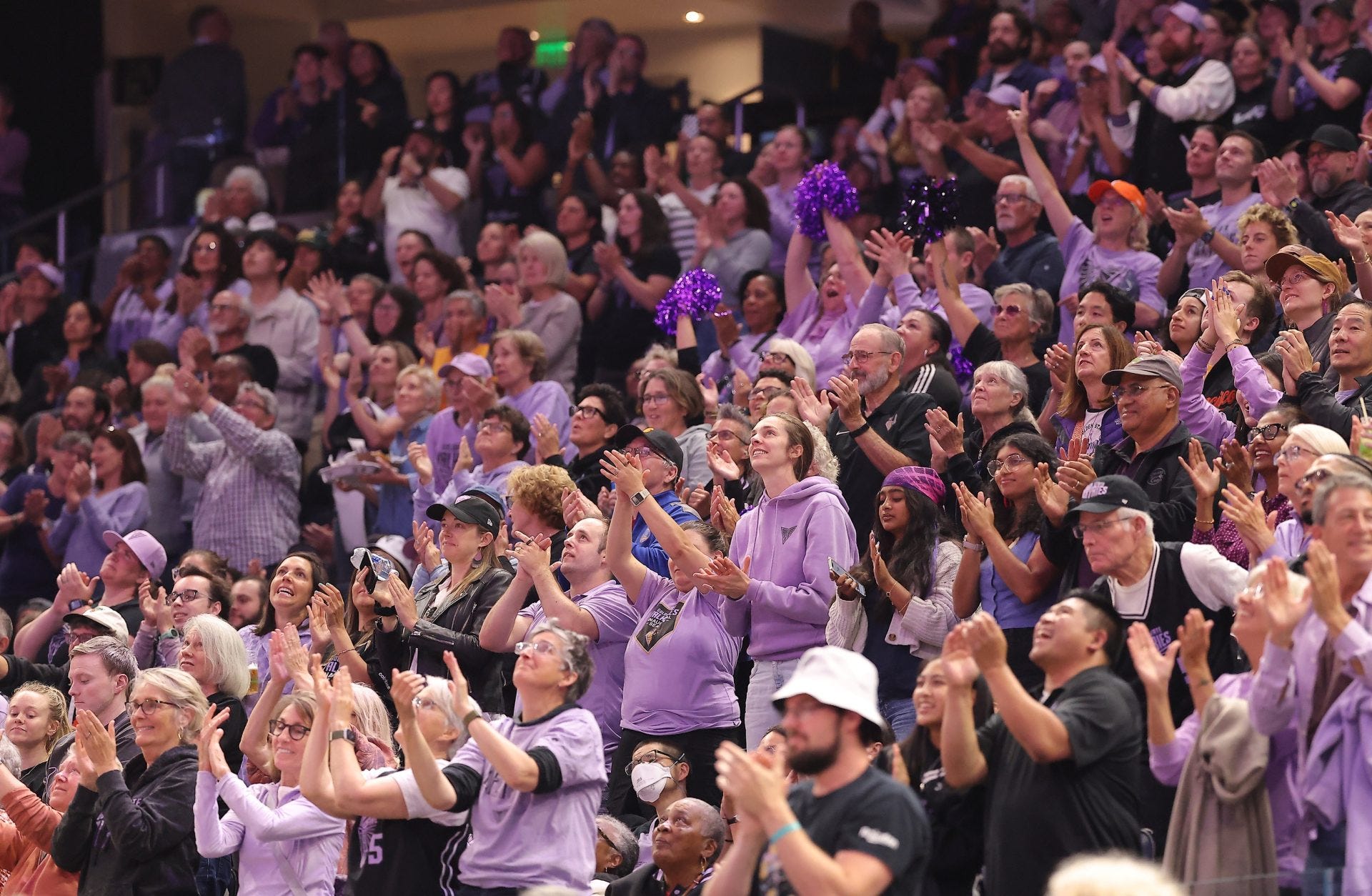
Whether the Valkyries go on to achieve the unthinkable or not, this is a franchise that is doing things the right way on and off the court and we’re going to dig into today how the franchise has set records by building a passionate fanbase.
This isn’t just any new franchise story.
Before the franchise had ever drafted a player, 15,000 fans had already placed deposits for season tickets.
Every home game in 2025 and 2026 was a sell out, that’s 44 consecutive regular season games.
Merchandise was bought in all 50 states and 70 countries around the world.
They’re the most valued franchise in women’s sports, at an estimate of $1 billion made by CNBC in May 2026.
So how did this happen?
They understand fans have different motives and pathways to fandom
It could have been so easy to default to targeting a generic definition of a women’s sports fan or just chase existing fans of the Golden State Warriors, but the smart move was to look at how they could build a dedicated fan base.
During a brand exploration phase they developed three groups of fans to appeal to:
Existing women’s sports fans who already follow women’s teams, leagues and athletes. Now they had a team that was local who they could call their own and have a deeper connection to women’s basketball.
The ‘bright believers’ are people who see supporting women’s sport as contributing to wider progress, with emphasis on community, representation and better opportunities for athletes and society.
Then the final group was the existing sports followers, those who arrive through college basketball or other teams who are drawn in by the sports competitive nature, familiar players and an entertaining sporting experience.
What’s great and a sign of building a dedicated Valkyries fanbase is that only 8% of Valkyries season ticket holders, also hold a Warriors one. A lot of women’s sports teams look to convert fans of the men’s team and while this is natural and a valid way to bring fans in, the increasing thought process and direction is on the opportunity to bring in fans who are into women’s sports specifically.
The Valkyries President and employee no.1 Jess Smith told Business Insider last year that the focus has to be on building a dedicated audience “You are building a product for the consumers that are pouring into women’s sports specifically,” she said. “You have to build a brand that allows them to associate with the lifestyle.”
They built their own distinct brand
Jess Smith has been instrumental in the success, using her experience from launching the NWSL team Angel City and was sought out by the Golden State Warriors owners when they bought the rights to launch a WNBA team.
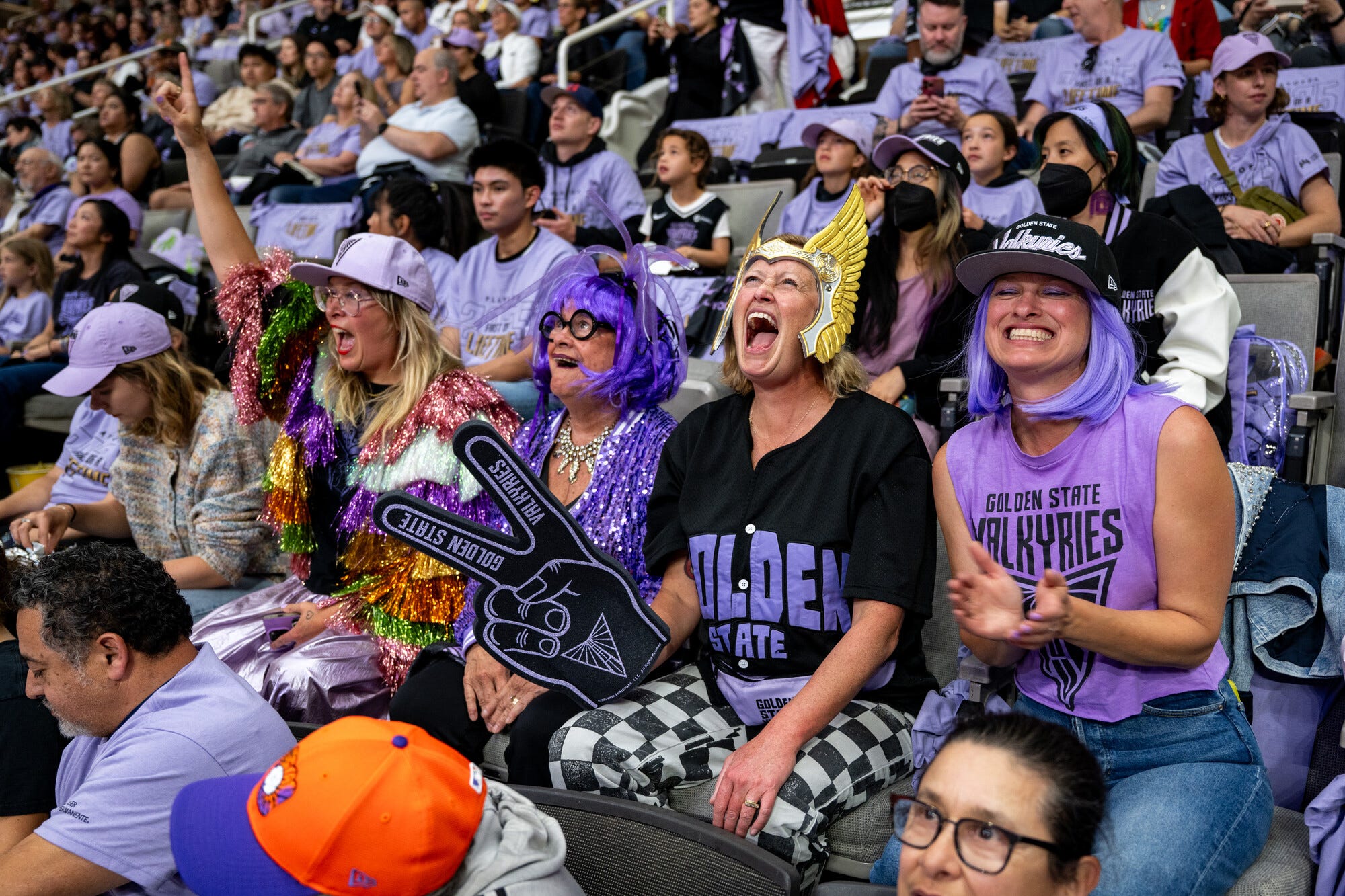
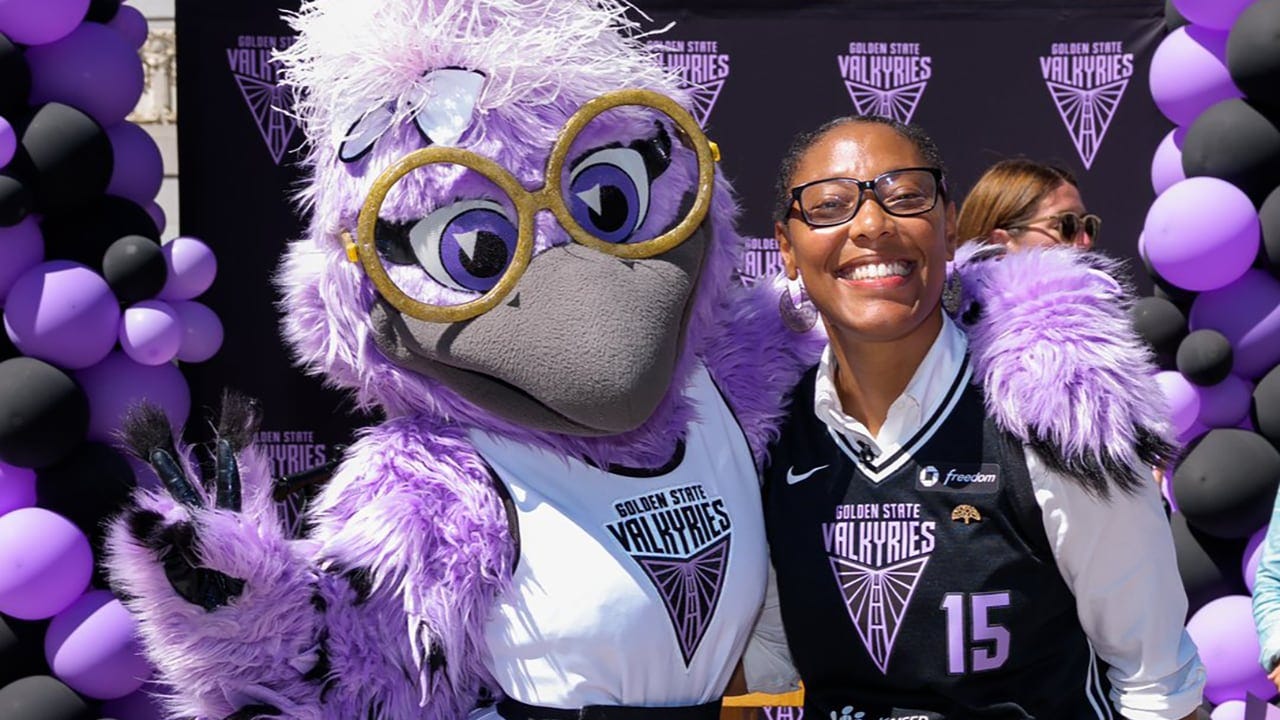
A key decision early in the brand exploration phase was how they position themselves alongside their NBA counterparts. At one stage they considered following the Warriors gold and blue look, but in keeping with building their own dedicated fanbase, it was only right they had their own dedicated brand and established their own identity. This led to what became a statement in its own right, the Valkyries violet and a logo rooted in Bay Area iconography. Even the name had fans input, with Valkyries a clear front-runner, with its name meaning female warrior figures from Norse mythology. The team plays at the Chase Center, same as the Warriors but the place has affectionately become known as ‘Ballhalla’, a twist on Valhalla.
Their marketing speaks to fans, not cliches and convention
You only launch a franchise once and the Valkyries made sure to lean into this with a campaign ‘First of a Lifetime’ which celebrated every first: first tip-off to first win, while inviting fans to relive their first moments, focusing on those that make the Bay, ‘the Bay’.
‘This is Ballhalla’ was a hero film that is part rallying cry and part celebration of the Bay Area community, Valkyries players and local icons.
Other notable marketing included a launch week block party featuring Bay Area artists E-40 and Kehlani, while the jersey reveal happened through a city wide scavenger hunt with local businesses.
They work with the community and partners that go beyond the logo
The Valkyries have worked with LGBTQ community leaders in Oakland, hosted fan engagement events and created the Valkyries Collective, a group of thought leaders from Bay Area who will advise and enhance what the Valkyries are building.
Their 40 commercial partnerships with brands like Carmax, Rakuten, Kaiser Permanente have generated record income, but all go beyond standard logo placement and support the franchises community and fan building engagements. Sephora sponsors both the practice facility and the Valkyries Fashion Show featuring player-designed collections. Through its partnership with JPMorgan Chase, they have have promoted women owned businesses throughout the Bay Area with its Violet Book of Business initiative, which features excerpts from local small business leaders.
Creating a new standard
When the ownership bought the rights to launch a WNBA franchise in the Bay, they ambitiously predicted they would win a title within 5 years. Their first chance to win has come in year 2, although this will be no easy feat with the Angel Reese led Atlanta Dream turning a game 1 loss around to lead the series. Game 4 tonight (Saturday) is pivotal in how the series may go and even if it’s not to be yet, there is a lot going for the Valkyries and they’ve reset the bar for what is possible in the WNBA, women’s sports and any organisation launching a new team.
Is your Sports Sponsorship following the 3 fundamentals of effective sponsorship measurement?
Sport sponsorship is one of the strongest growth areas in marketing investment today which the global market forecast to be $181.36bn by 2034, yet a lot of brands and agencies are not following the three core fundamentals when it comes to effective sponsorship measurement.
That’s one of the findings from a new report called ‘All to play for: how three fundamentals can transform sports sponsorship effectiveness’ from the IPA and the Sponsorship Effectiveness Forum (SEF). It’s based on a study of 143 brands, agencies and sports rights holders and I was one of the participants that shared my input from my agency side experiences.
The report was led by Rory Natkiel, who founded the Sponsorship Effectiveness Forum and launched his own sponsorship effectiveness consultancy Box Count this year. It’s an excellent piece of research that outlines the 3 fundamentals that consistently separate the leaders from the rest:
Set clear commercial objectives
Measure commercial impact and use it at renewal
Integrate sponsorship activity with wider brand communications
Just 45% of brands state they’re confident that sponsorship drives business results, while those applying the three fundamentals were around six times more likely to be confident. The practice of all three fundamentals in tandem is rare with a big say-do gap from objectives to measurement.
What I found really interesting is where people stated the sponsorships they work on sit across the The Sponsorship Effectiveness Model that Rory developed. It shows a lot of sponsorships activate the rights, but in silo from the rest of the brand work, with the opportunity being around developing creative platforms and turning them into distinctive assets that can create a category advantage and integrate into the brand’s story.
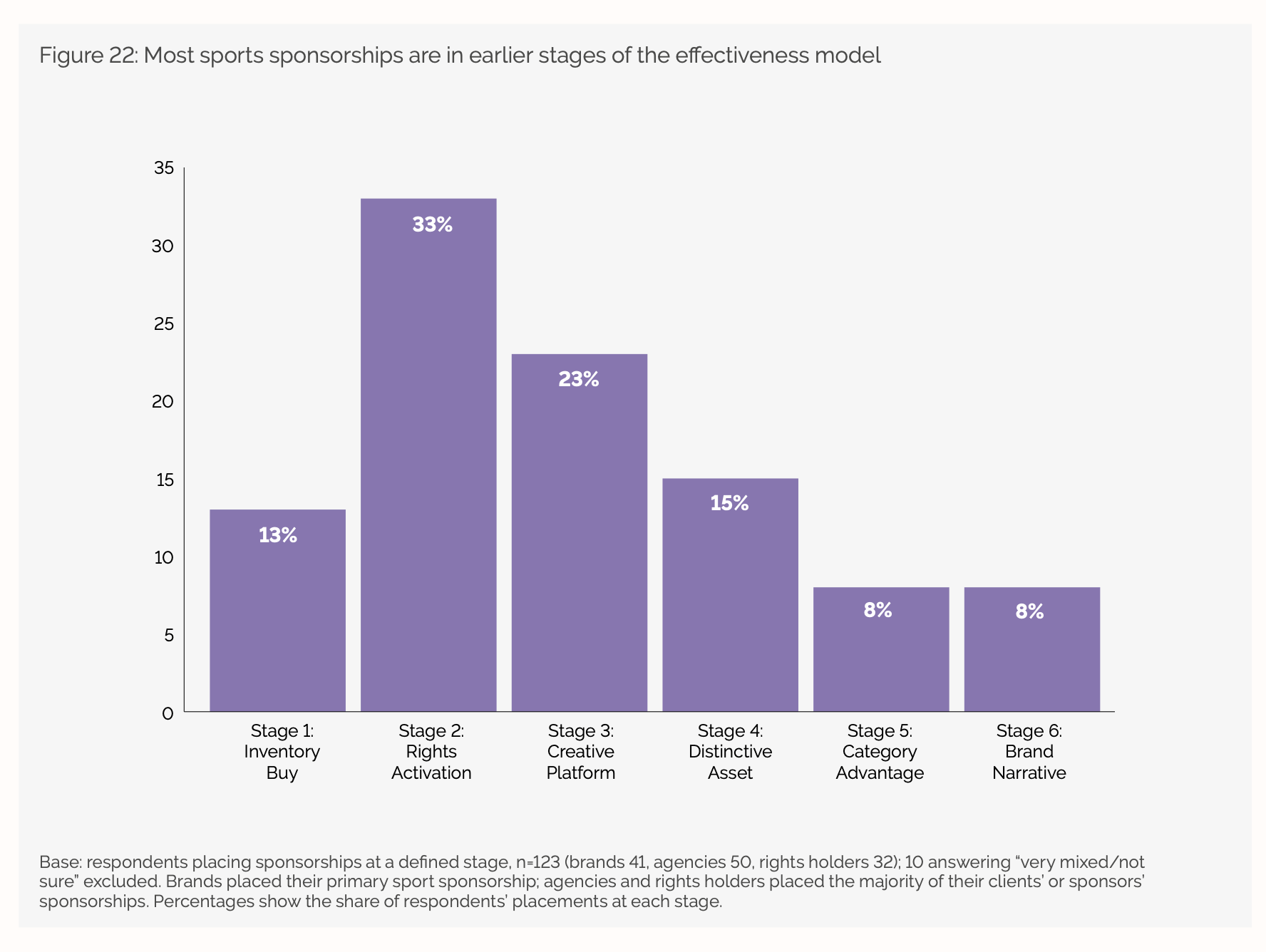
For more on the model, the Sponsorship Effectiveness Forum recently released a best practice guide to measurement which is an excellent companion piece to the research.
One of the key takeaways for me in the report is the need for shared measurement standards and a common currency so the model and supporting best practice guide is invaluable and I believe will become an integral tool on how the industry and people working in sport develop effective sports marketing and sponsorship effectiveness.
CATCHING THE EYE ACROSS HOW SPORT IS EXPERIENCED AND MARKETED
Nike held the London edition of their huge After Dark Tour last weekend, turning London City Airport into a running track. The 10K run for women is a great example of what Nike do when it comes to combining culture and community. The run is ultimately there to sell running trainers but product can be sold in ways that don’t take centre stage and instead, it’s the community that is put front and centre with the brand playing a role in facilitation or tackling a need. In this case the After Dark Tour recognised that running in the dark can be intimidating and sadly there are plenty of barriers to overcome for women to feel and comfortable. Nike can’t solve all those issues by themselves but they can help and the tour and each city event is about helping women reclaim the night.
If you think football culture, fashion and design defaults to nostalgia you wouldn’t be wrong and in this article from Soccer Bible, they look at what comes after nostalgia and highlights the people and places that are developing something new and original.