


I write this from my favourite coffee spot in Hamburg, Playground Coffee Roastery, which you should absolutely check out if you’re ever in the city. I’ve been in the St.Paul area for the revered football club’s STANDS festival, which covers the intersection of football, culture and creativity and I wanted to share some of the takeaways, insights and thoughts that grabbed my attention during it.
This was the second iteration of STANDS and first where there was a full day conference with a host of great panels and talks from people across the industry from Bundesliga to WSL Clubs, creators to creative & media agencies and streetwear legends to football fashion retailers. The second day saw the Millerntor Stadion open up for the city with a vintage football market, community fair and music festival. Only at St.Pauli was a feeling I kept having during the course of the days and given its influence and inspiration to many clubs, it wouldn’t surprise me if other clubs run something similar given this intersection between football, culture and creativity only continues to grow.
My shorthand days are a long time ago now and I was never very good, so expect some paraphrasing as I summarise some of the key things from a selection of the talks.
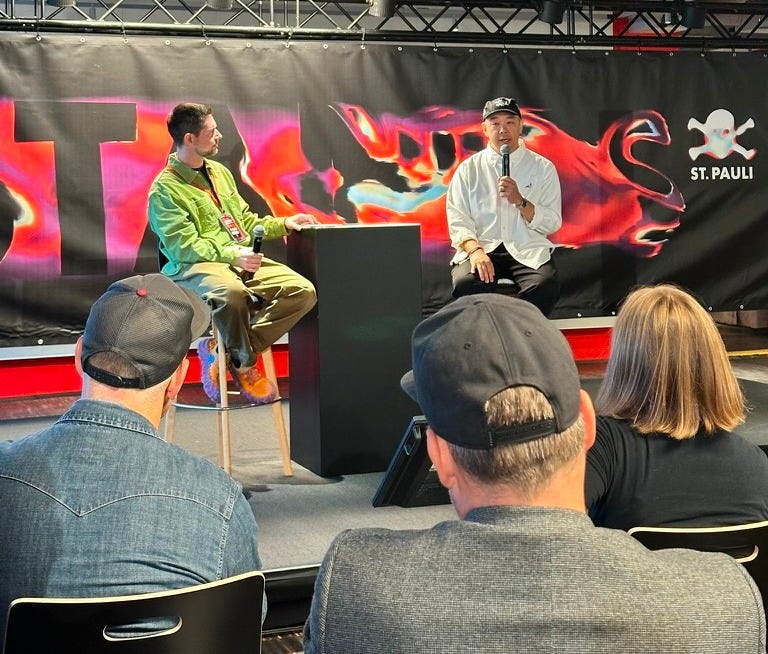
It was only right that the first session was with streetwear legend Jeff Staple, whose collaboration with St.Pauli launched that weekend and he spoke about how the club’s staunch values and standing by them were what attracted him to the potential of working together. He also landed a great point around resale, where prices have become a marker of hype but he wants to see little of his products and collabs on resale sites, as it means real fans are buying to wear, not sell. He wants the clothes to be sweat on, not on Stock X. I was lucky to join a more intimate ask me anything session with Jeff later in the day and it was a bit surreal to be sat in a room at the Millerntor, the home of a club I admire a lot, listening to a legend in Streetwear, Hip-Hop and design culture. Only at St.Pauli.
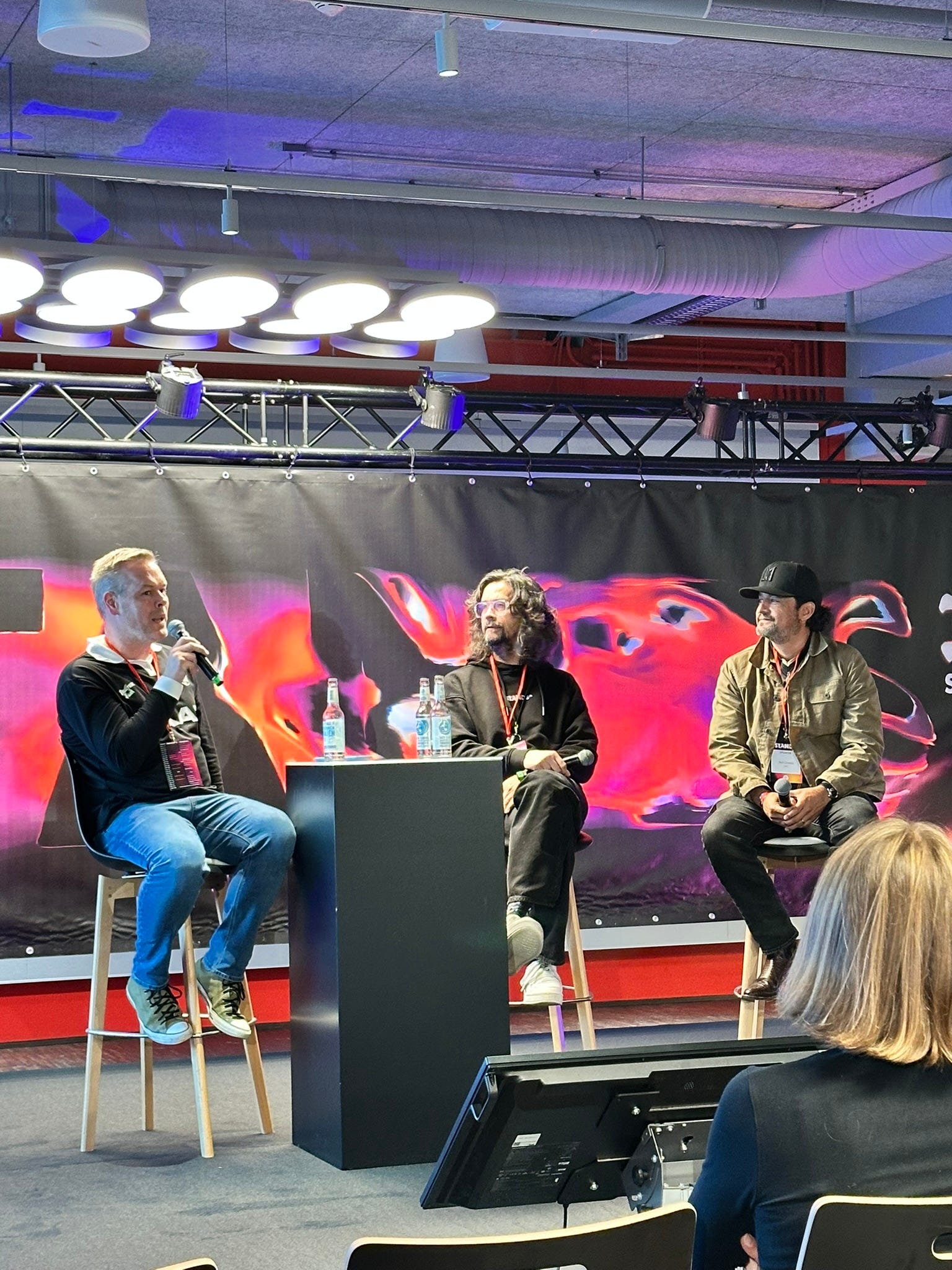
In Building Identity Beyond the Badge St Pauli’s Brand Lead Martin Drust described the club’s approach to how they’ve created and sold a brand around the world, as commercialising anti-commercialisation and it being necessary to do so to be able to compete. While the majority of fans understand that, it does leave them open to criticism that the club has to try to balance, while they also have to have conviction in making choices that if they do one thing by taking a stand, they may have to give up something else. He was joined on stage by Rich Orosco, the Chief Brand Officer from LAFC who has been at the MLS club since they got the keys to the franchise and he spoke on how in a city full of sports teams and an existing MLS club of 25 years, they had to build the fanbase block by block to turn it into one of the more passionate fanbases in the league.
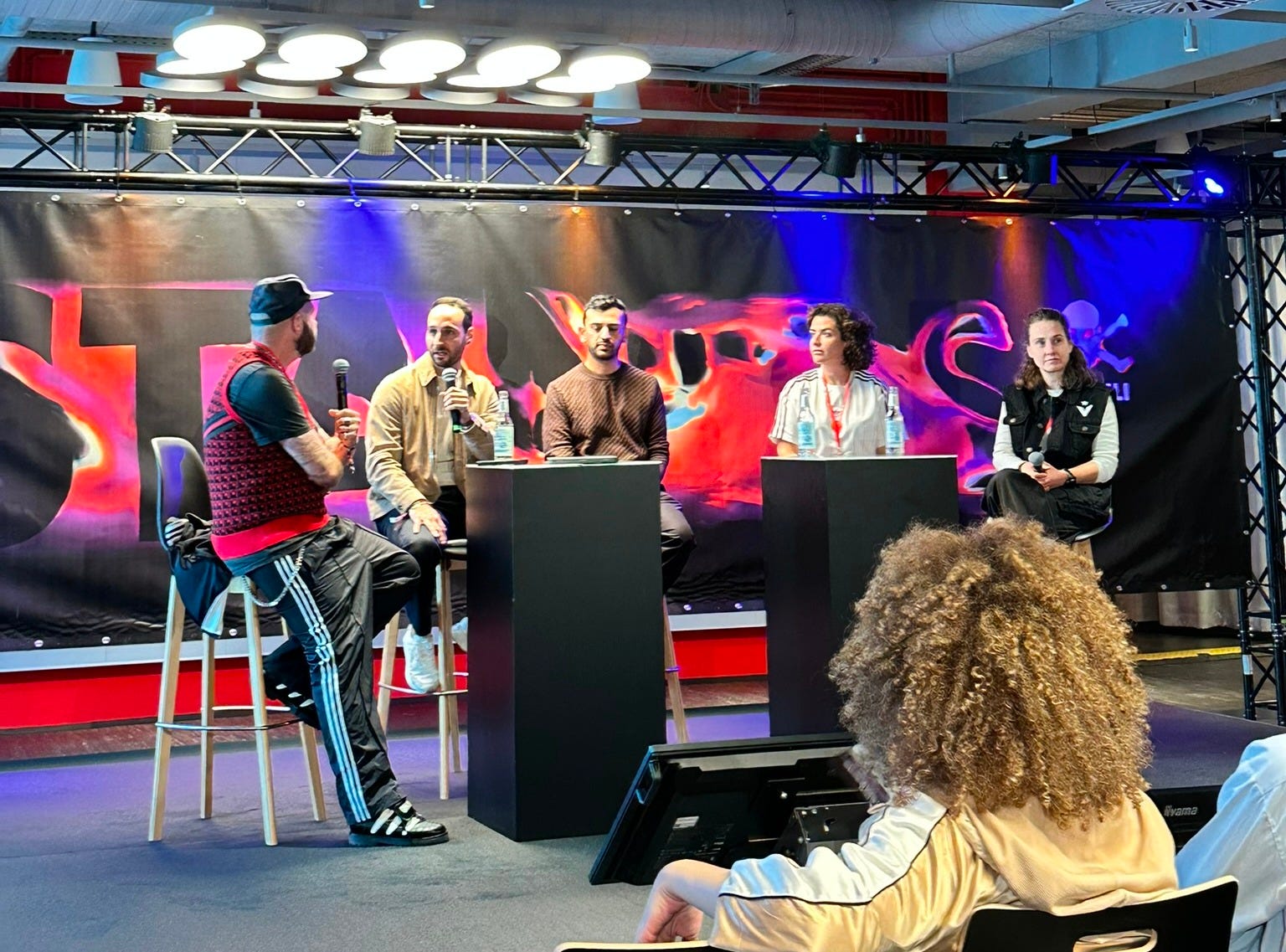
Can Culture Be Built was a great conversation that saw both established, growing and new clubs at the table in Stuttgart, West Bromwich Albion, Aston Villa Women and FC Viktoria Berlin. The panelists were all in agreement that culture can be built and it was great to hear them recognise how important fans are in doing that, making sure they have a role to play and taking them on the journey. My favourite point was made by Maggie Murphy from Aston Villa Women, who shared that while the Women’s team are part of Aston Villa, their history is very different and so too their identity. A great analogy was made around sibling relationships, they share the same DNA, but how they express themselves will have differences and it’s important for the club to nod to the shared elements while creating your own meaning. You can see the proof of this already in how Aston Villa Women are creating their own matchday experience and also with Manchester City Women recently launching their new logo mark and identity.
Staying with Women’s Football, Maggie Murphy was joined by Charlie Copsey of Underground Fan Club later in the day for Why Women’s Football is Building Culture Differently and expanded on how they are building a more bespoke match day experience. This included working with Guinness to create a post-match party called Matchdays Together and how they as a brand helped Villa Women by asking, “what do you need?” and “where can we help?” rather than simply show up with branding and product. Choosing to support a women’s football team has varying pathways and doesn’t simply follow the inheritance from family so often seen in the men’s game, while the makeup of the fanbase is more than just followers of the men’s team as well. The club has to create reasons to choose Villa Women and provide a sense of belonging through games and the matchday experience plays a key part in that.
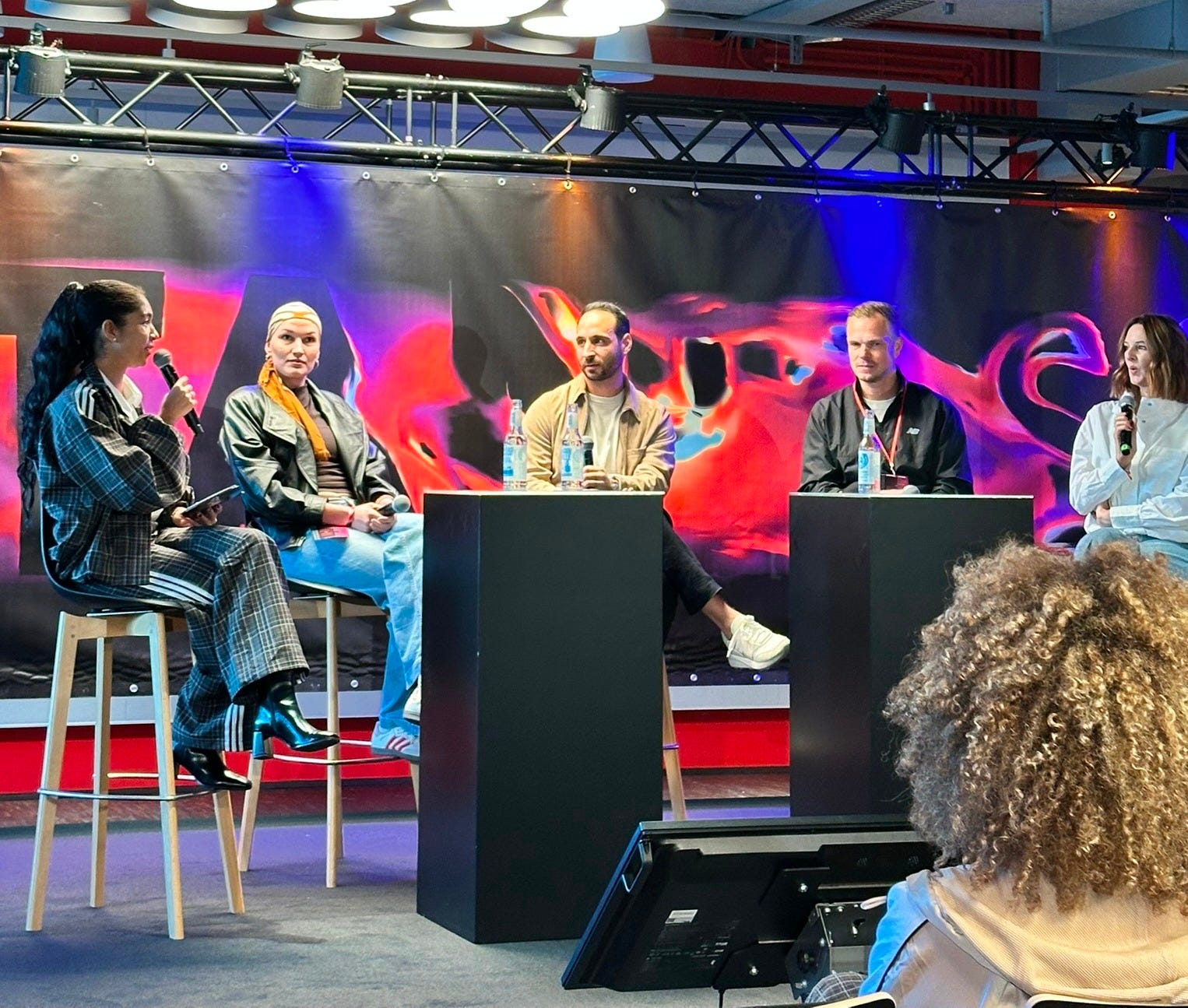
In the session, Why Do We Still Become Fans? Sunniva Ferri spoke about how the idea of fandom is very different from one person to another and everyone’s relationship with sport is going to be very different depending on how they get into the game and those pathways become really important. Charlie Copsey also mentioned how important fandom is for people looking for that feeling and sense of belonging, which is only becoming even more important these days.
For the kit lovers out there, Every Shirt Tells a Story was hosted by Asad Raza, the editor of Mundial and saw Claudia Hartung (SV Werder Bremen), Jan Borgmann (BSC Young Boys), Mat Davis (Saturdays Football) and Rogelio Vega (Seattle Sounders FC & Seattle Reign) all share stories on the thought process behind making kits, from where they can push the boundaries “anything but the crest” said Vega through to how important the storytelling is from both Borgmann and Hartung. It was interesting to hear the journey of Saturdays Football from the founder, who also gave us an insight into shirt culture in the US and how it’s not uncommon to see the same person wearing a Manchester United shirt one week, Liverpool the next, as they’re more ‘football enthusiasts’ and not as conscious of that being such a faux pas as anywhere else. Saturdays Football is a great brand and I’ve been to both their stores in Los Angeles and New York which I highly recommend. It’s great to see someone so passionate about football and football shirts turn that passion into a business that has thrived globally.
When Brands Become Fans was really interesting to hear from Congstar, who have been a long-term sponsor of St. Pauli for almost 20 years now and how over time, that presence and their support has built affinity with fans and felt like a true partnership. Instead of simply showing up with the classic presence assets, they gave away their sponsorship space at times to let fans and supporter groups display messages to support causes close to them.
The New Creators of Football touched on an interesting area we’re starting to see more of now and that’s creators obtaining football rights either licensed to them from traditional broadcasters or even buying rights themselves. One of the speakers, Manu Thiele, a German YouTuber has been showing highlights since 2018, which was very unheard of at the time and was disrupting how and where fans found that content. He was a great example of what Sophie Florian from Google spoke about, in how YouTube is the place that people are coming for highlights and the stories around the game and how creators play a key role in bringing that. It’s also interesting now that some of the creators are actually showing the games themselves and not just the content around it.
In one of the final sessions of the day, Football’s New Creative Directors there was a lively discussion between Martin Drust, Lisa Währer and Jan Borgmann and from the agency world Vincent Brass and Ryan McLaughlin, over the role of a creative director in football and whether one is needed, or is that role already being done in other guises? Martin from St.Pauli spoke about how he’s not sure if the club needs to have a creative director title, as that work is being done across multiple functions within the club itself and then outside partners are brought in to help bring to life some of those ideas. The actual essence, creative mindset and attitude are very much part of what the club does across multiple team members. This was echoed by Jan Borgmann who is in a retail and merchandise role and would be responsible for a lot of that output in partnership with internal teams and outside support like Bureau Borsche.
During this talk, it was great to hear from Vikoria Berlin’s Lisa Währer who spoke about how, because they are a club that doesn’t have the backing of a Bundesliga club, they are completely created from scratch and actually got involvement from their players in creative decisions and output, so they had a say in how the club comes to life. One of their ex-players is now their photographer, while they also had one of the players get heavily involved in designing the kit. I think it’s really interesting in terms of it not just being about that one person owning the title, but also about that collective responsibility that goes across the club. It doesn’t have to just be the people who are working in the marketing or retail departments. It can actually be the playing side getting involved.
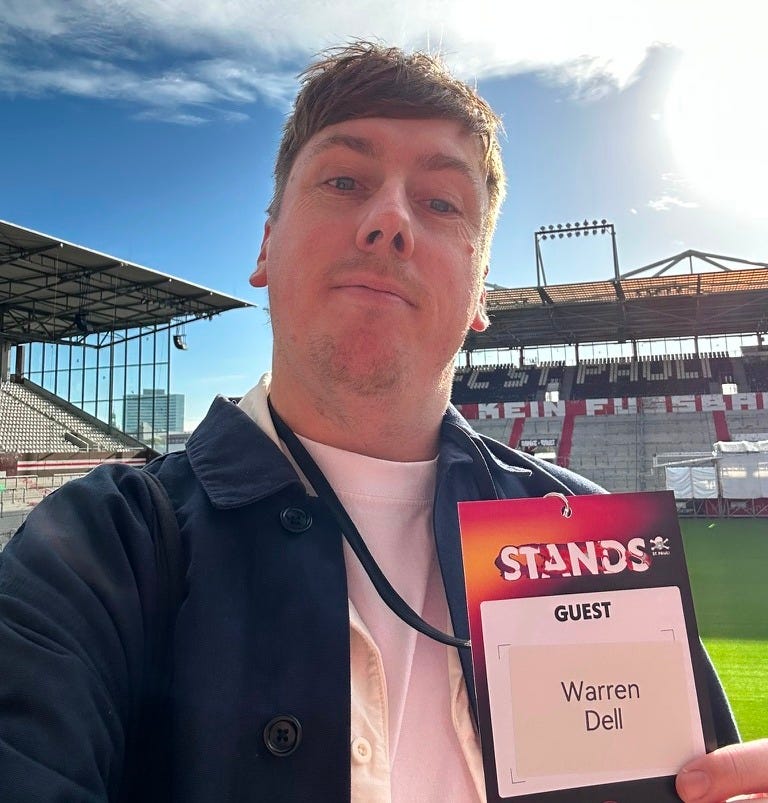
A lot of sports conferences can feel very corporate and are very expensive, so it was great to see something like STANDS come together which was neither and while improvements can be made, there isn’t many places you can get such a mix of people working at this intersection of football, culture and creative coming together for a day. St.Pauli should be applauded for that and I’m interested to see how it evolves next year.
ALSO CATCHING THE EYE ACROSS HOW SPORT IS EXPERIENCED AND MARKETED
I gave up Fantasy Football when it became a part time job to keep up with everyone, but I think if I was into the NFL and living in the states I’d go all out, just to take part in the fantasy drafts as only one person can pick a player for their team, none of this everyone triple captaining Erling Haaland. Only one person gets to draft Patrick Mahomes. Plus, these drafts are turning into full blown vacations.
Women’s sports bars are moving past the newness stage into fixtures of local life, with a focus on staying viable.
Athlos looked a vibe and the way the event was promoted was a masterclass in how you hero an event and the athletes. Chlöe Cripps has an excellent breakdown here you should read.
The Big 12 wants to host more college football games in Europe after 46,532 fans attended the game at Wembley Stadium between Arizona State Sun Devils and Kansas Jayhawks. That’s lower than the 60,000 promised but does feel like a decent number considering american football fans here may have already spent money on tickets to the upcoming NFL games at Wembley and Tottenham Stadium, while it also happened on a busy English football weekend.
Manchester City Women have created a bespoke monogram, built to live alongside City crest while giving room for MWC to say who they’re on their own terms and will be seen across the stadium, apparel, content and player content. Would love to see more teams take this approach.
Burn Boot Camp names Ilona Maher its chief motivation officer.
Sheryl Swoopes continues to help celebrate the 30th anniversary of the WNBA.
During this year’s World Cup, more than 93,000 visible appearances of brands promoting unhealthy food and drink, alcohol, gambling and speculative products were recorded by a study during coverage. Unhealthy food and drink brands accounted for more than 70%, with 65,722 appearances.
This season’s Super Bowl LXI week in Los Angeles will begin with a new annual flag football competition.
Big Bash Franchises are looking to sell stakes and using The Hundred as a case study on how.