


Weeks, months and even years goes into planning the World Cup activity we’ve seen from brands in the lead up to the tournament. Once the work goes live, most brands stop there and miss out on the big post-World Cup growth opportunity.
The instant classic 2022 World Cup Final achieved a global reach of close to 1.5 billion viewers and over 5 billion people engaged across the tournament. With an expanded 2026 tournament, those numbers are expected to increase and not everyone watching or engaging will be a core football fan and herein lies the opportunity.
In the US, active football followers grew from 8% to 12% after the 2022 tournament and among 18-34s, active football following climbed from 13% to 22%.
Every World Cup generates a broader audience than core football fans where newbies, casuals and lagged fans all watch the tournament. For some, a moment during the tournament will be the spark that turns a passive interest or curiosity into long-term fandom. But no one is thinking about reaching this group and acting as a conduit to their potential long-term fandom once the tournament is over.
When Japan co-hosted the 2002 edition, participation data increased every year with 800,098 registered players in 2002, rising to 835,556 in 2003, 862,045 in 2004, 876,702 in 2005 and 881,880 in 2006.
Every World Cup generates demand and a rise in participation as people become inspired by what happens and want to replicate that on their local pitch. But not every country is ready to facilitate that demand, with others making participation far from accessible.
Depending on which research used, we’re talking anywhere from 40-60% of people watching the World Cup aren’t regular watchers of football. Brands are leaving money on the table by not becoming a conduit or contributor to a growth opportunity that comes around once every tournament.
Not everyone will go on to become a core football fan or regular watcher, but if you said in any other category that you will ignore this much of an audience, warm leads if you will, you’d be getting some serious questions asked by the suits.
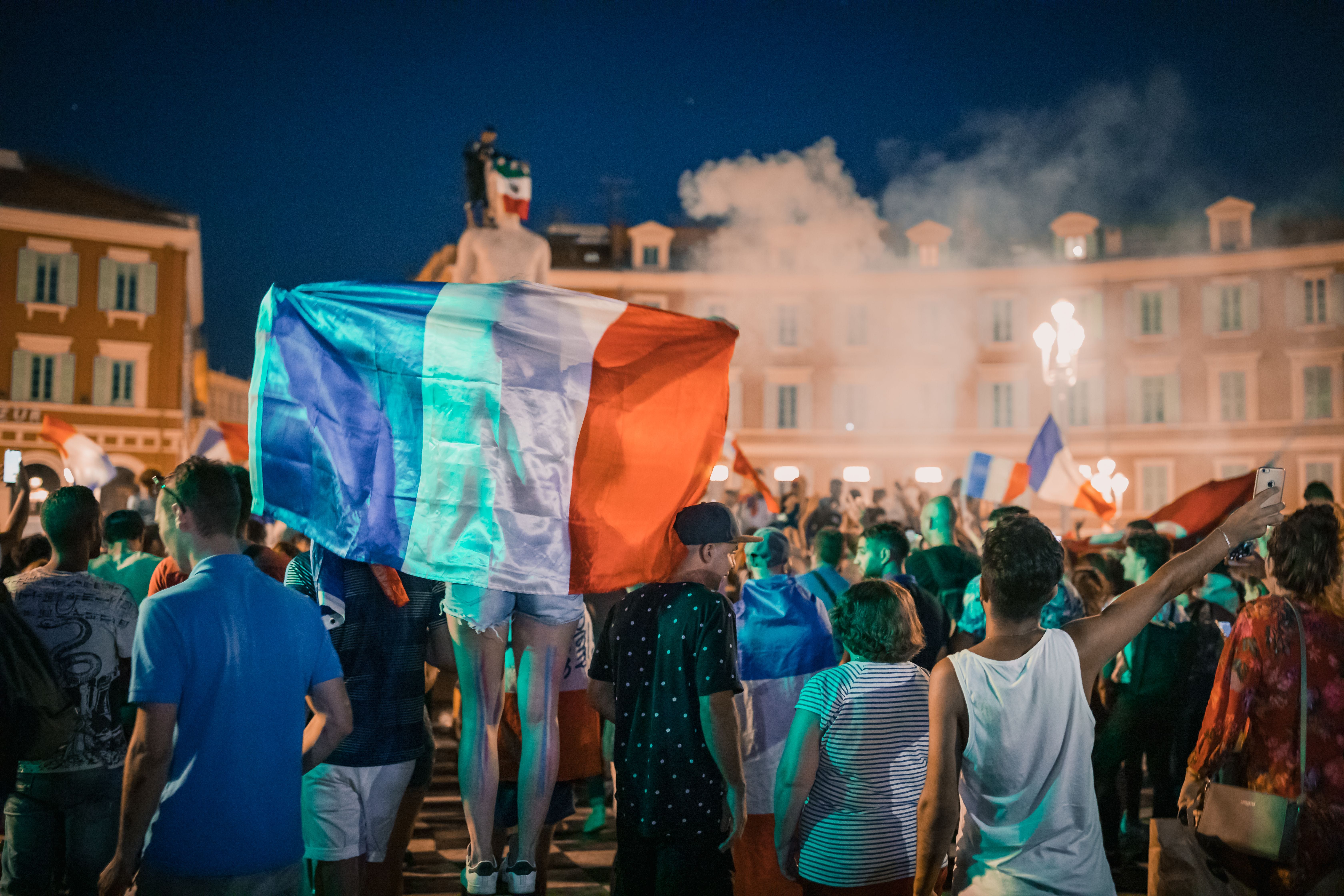
Football Italia as the hook
I was 6-years old when the World Cup in Italy happened but I have no recollection of it at the time. However a couple of years later I was given a VHS Cassette (remember them?!) of that tournament by my Nan & Grandad and I must have watched it over and over again. The tournament started a love affair with Italian football and culture thanks to the divine ponytail, Roberto Baggio. I was mesmerised by the skill of Gazza and Maradona. The dancing of Roger Milla. Heartbroken every time I watched England lose on penalties as I hoped for a different outcome (hey, I wasn’t the smartest kid!).
I’d already gone to my first Queens Park Rangers games and kicked a ball with my Dad down our hallway in my kit by this point. That video of football Italia however turned a passive curiosity into what became fully fledged fandom and wanting to play in organised football. The first football boots I wore were Lotto, because of course they had to be Italian.
Every football fan has a story like this, where there was that one moment where it clicked and they became invested in the game either as a fan or wanting to play, often both.
Fandom origin stories
We can easily lose sight of the fact because we’ve passed it ourselves, but every World Cup will be someone’s first moment that they will reflect on in years to come as when they knew football was for them.
Casual fans become regular fans.
Children ask parents to sign them up to organised games.
National team only watchers start following club football.
Social viewers want a more active connection to the sport.
Lapsed players return.
This is effectively an open goal for brands to take advantage of, yet while the new audiences grow, the brand response has not kept pace. Brand activity is focused on activating sponsorship rights, selling product and player led campaigns mostly in the lead up.
I’ve written before about the lack of fan depth in this year’s brand ads, so I’m not expecting much focus on fans and grassroots inspiration after the tournament, but that doesn’t mean time has run out to do so. The audience will be there, ready and primed.

From fleeting moments to attachment
During Qatar 2022, more than half of adults across 34 countries said they planned to watch it, even though only 39% said they followed football regularly. That tournament saw the best ever performance by Morocco, which had a massive impact on the nation’s support. Saudi Arabia’s shock win against the eventual champions Argentina created a new awareness and love for the game. Japan matched their previous best of reaching the last 16 and the wins against Spain and Germany had an impact on the domestic J League, helping attendances rise.
Established football markets also see rises as a result of the tournament. When Lionel Messi finally added the World Cup to his trophy cabinet, football fandom increased further in Argentina, a nation already fanatical about the sport. The Argentinian Football Association directly attributed the tournament win to the growth in fans watching the domestic game.
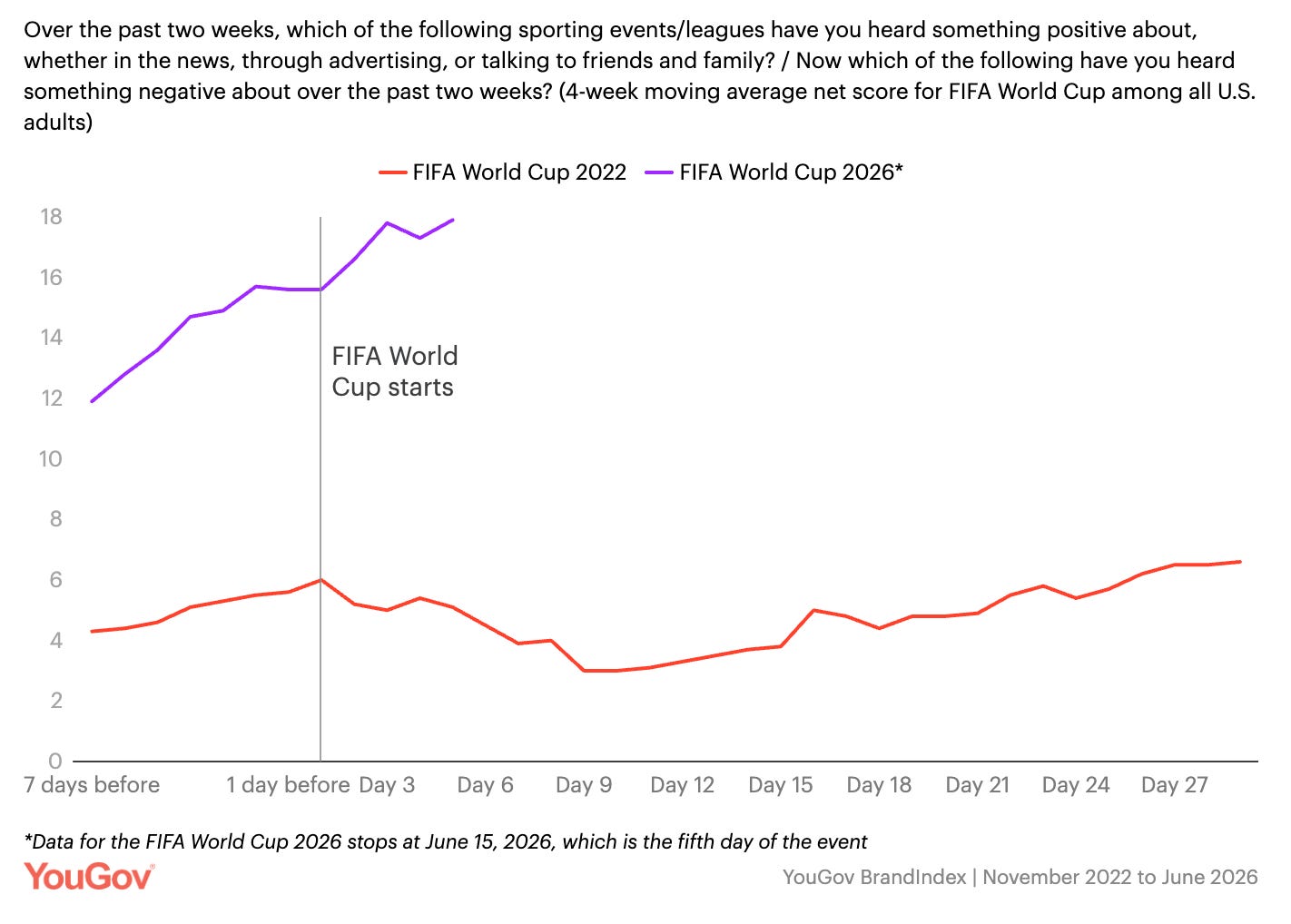
We can already see a larger increase in traction at the start of this tournament amongst the US public compared to 2022 with early YouGov Sports Index data. While 64% of respondents to a Nielsen pre-tournament report expect their interest in the sport to grow further.
How can brands, rights holders or clubs turn emotional hooks into sustained fandom?
For reaching newbie fans, a brand or rights holder can act as their navigation into deeper football fandom and expand their knowledge.
The emotional attachment and social bonding is a key part of what they felt during the tournament, so why not be the brand that helps newbies find their tribe and community by creating it? Help facilitate those who are experiencing their new found love of football with like-minded fans.
Educational content that speaks to newbies in a way that isn’t patronising but explains key moments of history, elements of the game and player facts in an entertaining way can help build those little nuggets of insights and anecdotes for them to enjoy, re-tell and act as introductions to deeper immersion.
If international football becomes the hook, can domestic leagues act as the gateway to the clubs? For the clubs who have players at the tournament, why not market to the newbies to convert them to become supporters? If an England newbie is liking Harry Kane or Declan Rice, then Bayern Munich or Arsenal should be looking to use that as a way to grow more fans.
From pro influence to grassroots intent
When we think about inspiration from pros to the grassroots game, we see big jumps following tournament success or hosting. After France hosted and won the 1998 World Cup, French football saw around 240,000 new registrations in the 1998–99 season. South Korea football participation rates nearly doubled (5.1% to 9.1%) after hosting 2002. US Soccer projects participation to grow from 20 million to 29 million by the end of 2026 and to 34 million by 2031.
It’s not always a moment that inspires a young child either, as older people also want to take up the game casually. Americans aged 35-44 grew their outdoor soccer participation by 118% between 2018 and 2025. The 45-54 cohort grew by a staggering 247%
How can brands, rights holders or clubs turn pro inspiration to grassroots intent?
Grassroots is where plenty of endemic and non-endemic brands are involved already with support for infrastructure, funding and equipment. But when that initial moment of inspiration into intent to play happens, it is left for the individual person or parents to navigate. Who will be there to help facilitate the demand post World Cup? This becomes a local level engagement opportunity so brands with larger budgets and local presence like banks, supermarkets, food and retail could all get involved.
The grassroots game around the world varies in stature, strength and health. For some the facilities are lacking with too many players and teams needing to share too few facilities. For others the cost to play is expensive whether it’s pitch rental or club fees. No one is ever going to turn down money from a brand that wants to genuinely help grassroots and is an authentic fit.
If someone suddenly wants to take up football at a later age it can become quite daunting to navigate. Can a brand facilitate football for older newbies where standards aren’t judged and the fundamentals are taught?
Are you taking advantage of reach, or growing audiences?
We’ve already seen some wonderful moments on and off the field at the World Cup. Moments that will last a lifetime and for some, will be the entry point to a lifelong fandom and passion for the game. It could also be a fleeting moment that ends once the tournament does.
If you’re working at a brand, club, league or rights holder that is looking to grow fanbases and reach large audiences, are you ready to help turn what someone felt during the World Cup into something longer lasting?
Data & Research Used
2022 World Cup Final achieved a global reach of close to 1.5 billion viewers and over 5 billion people engaged. Source: FIFA
In the US, active football followers grew from 8% to 12% after the 2022 tournament and among 18-34s, active football following climbed from 13% to 22%. Source: YouGov
Japan Football Association registered player numbers increased from 800,098 in 2002 to 835,556 in 2003, 862,045 in 2004, 876,702 in 2005 and 881,880 in 2006.
Source: Japan Football AssociationAdlook research across six markets found that 64% of World Cup viewers were casual viewers. Source: Adlook
Across 34 countries, Ipsos found that 55% of adults planned to watch at least some of the Qatar 2022 World Cup, while 39% said they followed football regularly
Source: IpsosThe J.League reported record total annual attendance of 12,540,265 in 2024. Source: J.League
Argentine domestic football had a record-breaking 2023 after the national team won Qatar 2022. Source: Buenos Aires Herald
After France hosted and won the 1998 World Cup, French football saw around 240,000 new registrations in the 1998–99 season. Source: Le Monde
Nielsen reported that 64% of surveyed North American fans expect their interest in soccer to grow further.
Source: ReutersSouth Korea football participation rates increased from 5.1% in 1994 to 9.1% in 2016
Source: Frontiers in Psychology / PMC – Effect of 2002 FIFA World Cup: Point of Attachment That Influences Mass Football ParticipationU.S. Soccer projects participation to grow from a baseline of 20 million to 29 million in 2026 and 34 million in 2031
Source: U.S. Soccer – Soccer Forward Foundation Scales Up as U.S. Soccer’s FIFA World Cup 26 Legacy InitiativeAmericans aged 35–44 grew outdoor soccer participation by 118% from 2018 to 2025. Americans aged 45–54 grew outdoor soccer participation by 247% from 2018 to 2025.
Source: Sports & Fitness Industry Association – Soccer Participation in the U.S. Is Surging Before 2026 World Cup