


It was the largest and longest World Cup, heavily commercial and controversial, the most expensive and inaccessible. There’s a lot to not like thanks to FIFA’s greed and dodgy behaviours. The cosying up to Trump and that man’s determination to overshadow other people’s achievements and general disdain for multiple countries fans, players and officials leaves a sour taste and overshadows the football. The first World Cup where one of the host nations is bombing another team’s country is a mental sentence to write.
This World Cup was far from perfect but we can still find plenty of joy through the moments of drama and brilliance the football gave us. And of course the way fans shape the tournament and give it meaning through coming together, showing we’re more alike than we think or are told. After almost 6 weeks and 104 games, below is a list of notes, observations and thoughts as a round up to what I witnessed through a fans and marketing lens, while also spending time out in New York when the tournament reached its business end. There’s no on the pitch football analysis here, but plenty on the fans who made the World Cup, the brands that wanted to be everywhere at it, the content that told the story, the ways FIFA turned the sport into a cash grab and the impact of the tournament.
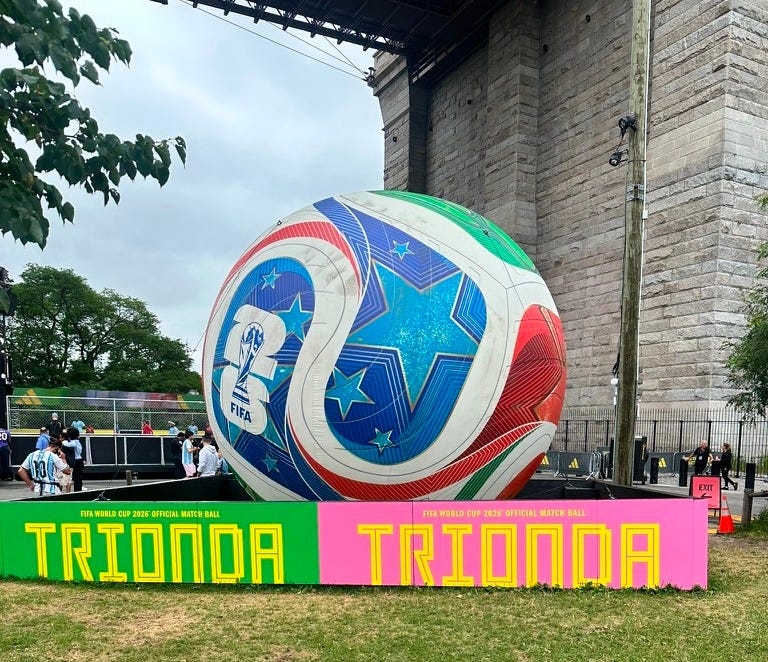
THE FANS
The fan experience varies inside and outside the stadium. There were noticeable empty seats to begin with but most games were sellouts or near capacity despite the expensive ticket prices and all this will do is make FIFA feel the demand is there so the prices are justified. They said this is the US sports way but I don’t think that means we’re in for a reduction in price when 2030 in Morocco, Spain and Portugal rolls around. FIFA might deem it a success because stadiums were full, but these ticket prices limit who gets to see games and starts turning the World Cup into a luxury, not a game for all, despite what their marketing tries to tell us.
When it came to the TV coverage, most people in the US were increasingly turning to the Spanish language broadcaster Telemundo.
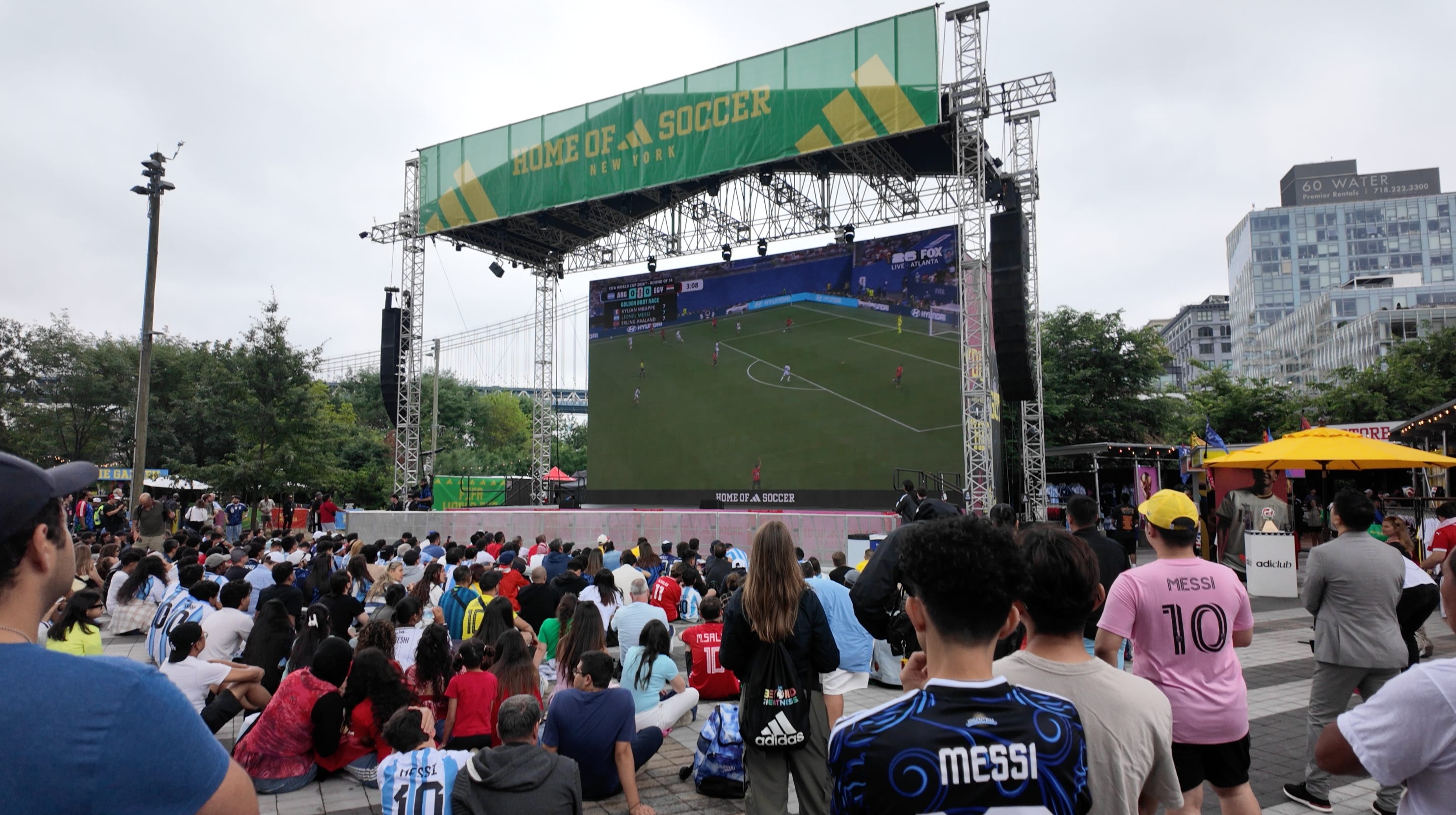
Fan zones, packed bars, town squares and anywhere there was a screen brought people together when their team was playing, showing the World Cup and live sport is one of the last acts that bring large numbers of people together at any one time and can also attract the widest range of support from hardcore to casuals and the curious.
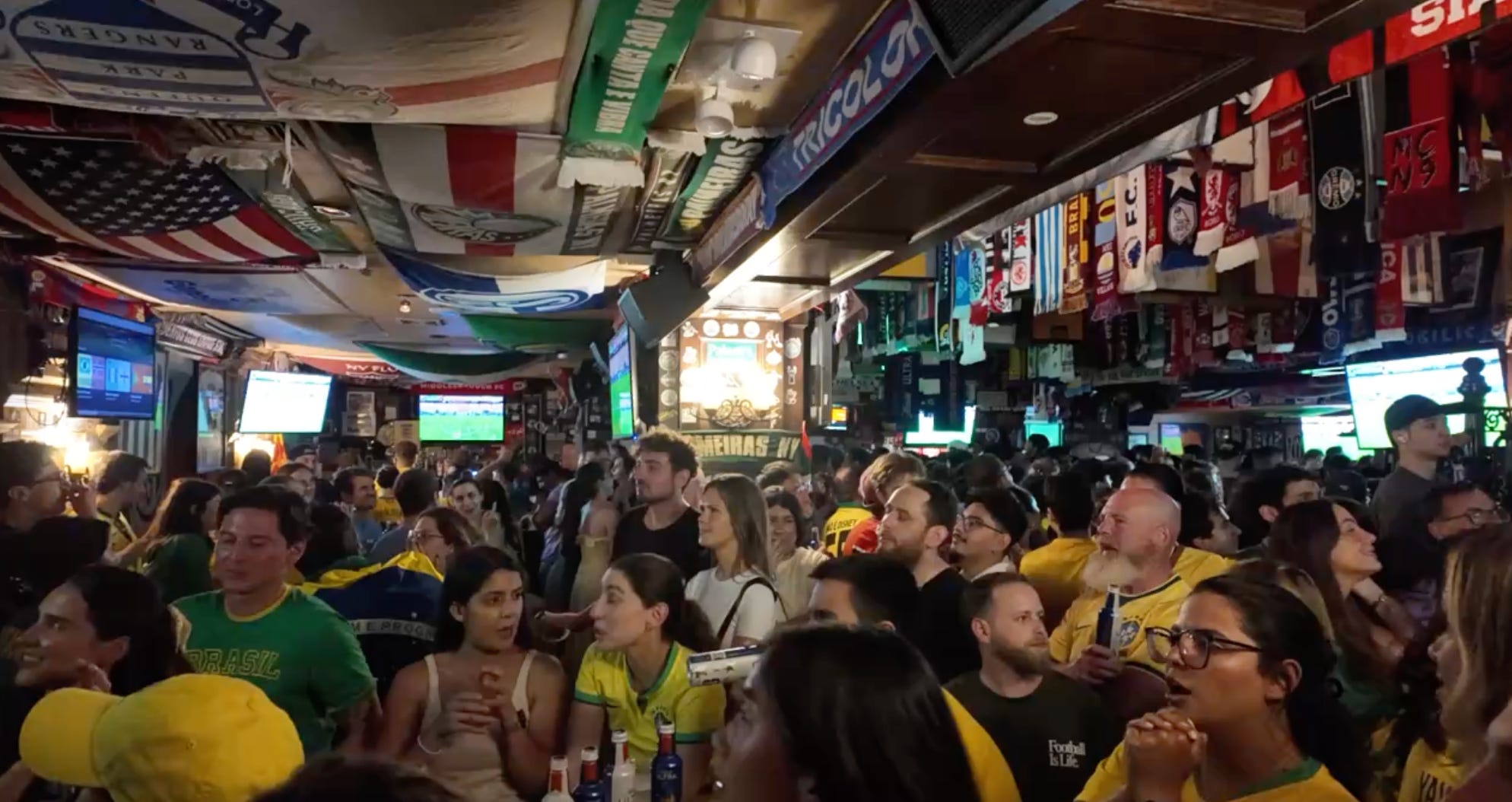
Host cities and local culture discovery. Fans go to a World Cup to support their team on the pitch, but what they encounter off the pitch in the host cities helps shape their overall experience and memories of it.
We’ve had: A Scotland takeover of Boston, football fans packing out MLB ball parks and England fans at the Rodeo. The cult of Buc-ees has grown further. Fans were sampling American fast food culture and a love of ranch. Japanese fans have again gone viral for cleaning up the stadiums. Norway stole the hearts and minds of their hosts, particularly in New York after their two rowing escapades in Time Square. When I visited Nike’s flagship and Classic Football Shirts in New York, their jersey was the most wanted and fastest selling. Egyptian fans checked out of the Trap Music Museum in Atlanta and Argentinian fans visited the College Football Hall of Fame. Mexicans and South Koreans have a football friendship stemming from the 2018 World Cup after South Korea beat Germany and saved Mexico, together they sang “Gangnam Style” and drank tequila in the streets of Los Angeles and Mexico.
Host cities welcome fans in, even if most of the stadiums in the US and Canada decided to exploit fans with ridiculous food and beverage prices. In Atlanta, arguably one of the best stadiums as well as being walkable downtown was the only stadium whose food and drinks prices were fan friendly.
THE BRANDS
adidas vs Nike. If you work in marketing long enough you hear the same old arguments over who won the tournament and why people think they’re absolutely right and you’re wrong over what adidas and Nike are doing. Now watch me throw my view in but all I’ll say is we’re very quick to judge without seeing what happens at purchase and what fans and consumers actually think before we go through this weird ritual of crowning winners. I think both brands did what they needed to do for where they’re both at in their well documented brand & business turnaround jobs and roles as official sponsor and non-sponsor. The adidas kits were some of the best design work ever seen at a tournament. While Nike’s streetwear and fashion collab collections for some of their roster of team’s walk out and warm up apparel deserved the hype. Both brought it with their brand films, adidas paying homage to the playground in Backyard Legends and Nike bringing back some of the star studded epic attitude in Rip the Script that we’ve seen missing from them in football for a while.
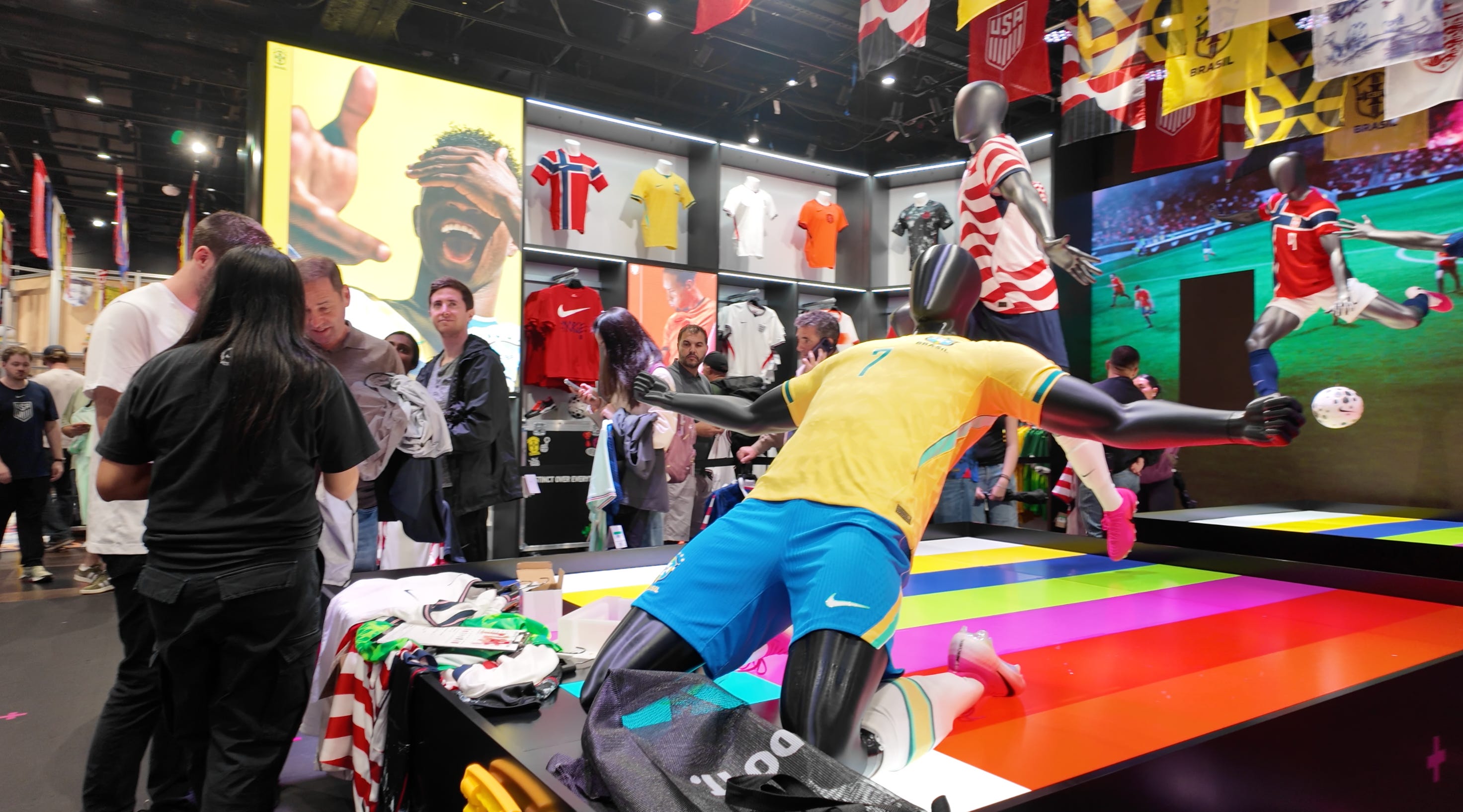
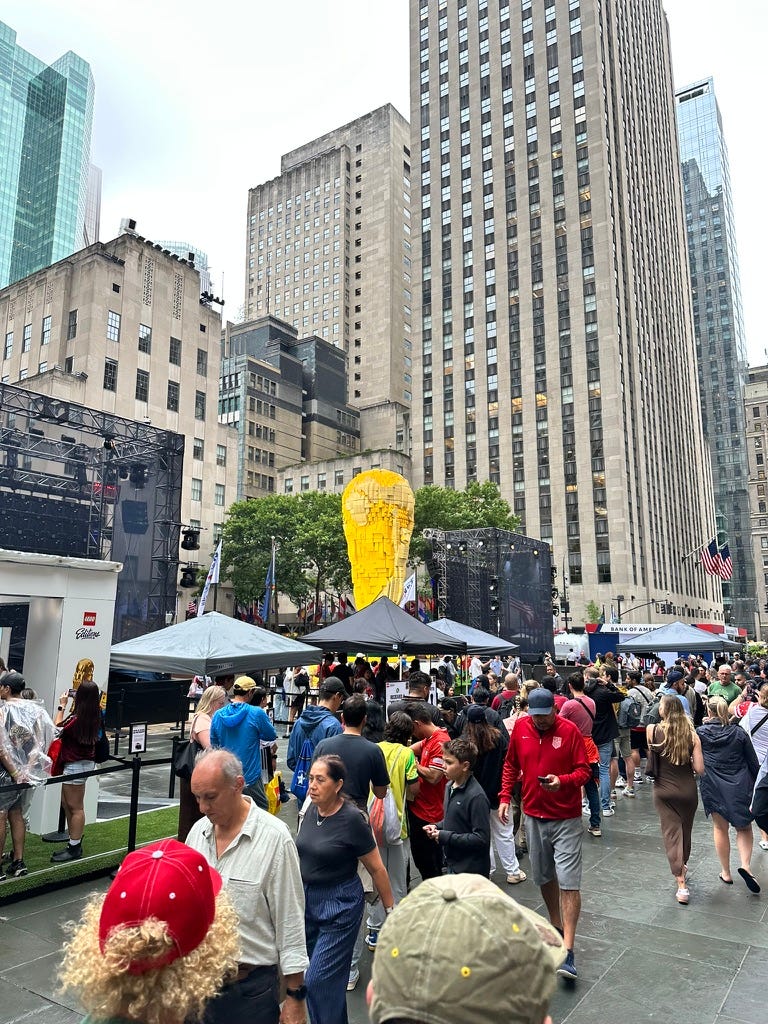
Some of the interesting things I noted when out in New York was the difference between how sometimes the official sponsor tag can dictate where resources and budget has to go, at the expense of potentially more interesting work and opportunities. As official partners, adidas had a presence in the stadiums, but did it come at the expense of the streets? Their impressive Soccer City fanzones across New York, Atlanta, Toronto and Dallas let fans watch the games in picturesque settings, but other than retail and a football pitch, there wasn’t much else to catch the fans eye out of watching the games. Which of course is the main point of these but could we have seen something more interesting to engage with? Nike needed to win the streets back and I saw a great retrospective of their Mercurial silo in Mercer Street that showed its legacy and innovation in football culture, while they also ran the Toma Street Football finals at Bryant Park after a number of editions around the world.
Other brands lack an understanding of fans. I wrote a lot about brands and their campaigns in the lead up and as more work rolled out during the tournament and seeing things on the ground in New York and US TV it all still feels like there is a big disconnect to how brands view fans and showing how fans actually behave, interact and show support for their teams. It seems a lot of CMOs want to meet David Beckham or agencies just got lazy with talent suggestions. There’s a lack of honest fan perspectives or capturing the true emotions that go into the game. Instead we get a very glossy and paint by numbers reflection of what brands think fans look like. When it’s done right, like this La Colombe coffee ad, you get to see some actual passion of what football fandom is. When it’s done wrong, it’s cliches wrapped in overly polished grading.
THE CONTENT
Content creation around the game. The 90 minutes was just one part of what we watched with the games fuelling the content eco-system. Reaction videos, memes and analysis filled the in between moments and in the UK I wondered if the main broadcasters BBC and ITV missed a trick by not having some morning catch up show for those not wishing to watch games past our bed times. Spoiler free highlights were great, but sometimes they were less than 10 minutes and left you wanting more for some games. That wake up content indulge where you’re catching up is different behaviour for fans outside the primary time zones and even brought moments where you couldn’t check the whatsapp groups till you’d caught up to avoid the spoilers. My routine of BBC highlights followed by the Rest is Football gave me what I needed from a goals and catch up perspective and the latter kept me entertained throughout. I wonder if in future World Cups Netflix has a play for rights, whether live or highlights and packages these up with the Rest is Football and whoever else they’re working with at that point?
One of the content highlights was photographer Florence Pernet who sat in her apartment taking photographs of the World Cup after not receiving official accreditation. The shots became widely shared and imitated, with Porter referencing Matthew Johnson as an influence from the beginning in one of her posts. Pernet would go on to shoot for Michael Olise and the Portuguese team.
This was the creator World Cup, led by one of the biggest streamers in the world IShowSpeed creating an unofficial tournament song and being everywhere. One of the interesting streamers was Brazilian channel CazeTV, run by Casimiro Miguel, who broadcast all 104 matches for free. His was the only outlet in the country to do so and the channel held the exclusivity for 49 games. Against Scotland they recorded 18 million streams and a peak of 22.3 simultaneous connected devices watching their round of 32 game against Japan.
Creators were big business for brands to bring themselves closer to fans with brand houses catering to them and on the ground content published in partnership. Austin Franklin and Kevin Akoto became the envy of football fans everywhere with their job being to watch every game from a booth in Time Square and paid $50,000 by Fox to do so.
A big difference between Russia and Qatar at this World Cup was the importance of creators for brands and their presence as the category has grown and the world cup in North America became a more attractive proposition to visit. Even with games happening every day the football content diet needed fuelling and on the ground creators and creator led channels like Fusion Josh, Snapback Sports, Footy Adventures and AwayDays made me feel like I was close to the atmosphere on the ground and part of the tournament journey. Whoever you supported, there was respective creators and YouTubers bringing fans along for the journey and it was a tournament where we didn’t have to rely on traditional broadcasters telling us what the atmosphere was like from their corporate media environments, we had fans truly on the ground amongst it telling the story.
Vivrant Coverage. I want to give a little plug here for some of my content published around the tournament at Vivrant. I started Vivrant not long before the World Cup and naturally a lot of the content has been more football focused than is intended over a longer period of time. It’s been fun to write and even create video content around the tournament and I’ve covered how fans shape the tournament in both writing and on the ground video, to those in-between moments as fans come together and discover host city culture. I’ve looked at how brands portray fans and fandom to the opportunity most of them will miss now the tournament is over. It’s been fun, I’d love to spend more time on the ground at the next one but I hope you enjoyed the content as much as I did making it.
FIFA
FIFA’s unashamed money grab. I could easily write a lengthy post about all the bad FIFA brought to the table but I’ll try to limit this to a few areas. This was the first tournament FIFA controlled themselves, with no local organising committee and it was clear to see how much of a cash grab this was. With ticket prices making the games inaccessible to so many, an anything for sale attitude to courting VIPs and changing the rules of football to suit broadcasters, FIFA were here to make money and they expected local cities to help them profit with little benefit to those hosts. With an operating budget of $2.7bn, FIFA expects to make $15bn out of this edition. There’s even a dispute underway over the selling of the grass used in the World Cup final, with FIFA planning to rake in $11.2 million if they sell all 2,026 pieces, despite the cost of the new turf to make the pitch football ready being paid for by New Jersey tax payers to the cost of $13.04 million.
FIFA’s tight grip on who can take part at the World Cup, till Trump speaks. FIFA changed names of stadiums and taped over condiments so only those who paid the high commercial fees could be anywhere near the words World Cup. When it came to people who could access the tournament, they noticeably sat back quietly as Trump and the US did their thing. Referees, teams, officials, player’s families and fans were all left out or their visits made difficult by the US’s tough stance on entry which goes against FIFA’s football for everyone message. When a country’s leader is leaning on a sports governing body to overturn a decision made in the game (no matter how harsh it might seem), we can’t ever go back to an innocent time and say there’s no place for politics in sport when so much of it is shaping and dictating who plays it and who gets to witness it.
Changing what a game of football looks and feels like. The hydration commercial breaks were roundly booed and rightly so by fans in the stadium and it was more noticeably how jarring they’re when watching on US television where the Powerade Hydration breaks had an additional sponsor on TV and then included a load of adverts, even missing action early on in the tournament. They changed how a game of football was played into four quarters and noticeably had an impact on the games, with 32% of group-stage games having an above-average shift in momentum after the first three-minute hydration break, and 26 per cent after the second. Not good for footballers and fans, great for commercial broadcasters, brands and Bon Jovi.
Four quarter football wasn’t the only change made to the rules we’re used to in football with FIFA seemingly willing to put the American Sports stamp on everything. We’re used to pre-game concerts for Champions League and while I have no interest in it, I can understand why FIFA would want to put on a half-time show. It shouldn’t mean extending half time to almost 30 minutes though to fit in what has been described as an atrocity, uniting the world in bafflement or in simple English terms, crap. The final even kicked-off six minutes late due to a drawn out closing ceremony. This felt like a tournament where FIFA didn’t care if any of those hydration breaks, longer half-times or delaying kick-off had an impact on the players, or the game itself - the actual thing people want to watch. As long as it drove revenue and the commercial people handing money over or making it were happy.
THE IMPACT
Celebrating the diaspora and identity. All but 8 of the 48 teams in the World Cup included a player born overseas. Tahith Chong was the only player of the Curaçao squad born on the Caribbean island. There were more players born in Rotterdam playing for Cape Verde than in the country’s capital. England fans in a pub chat hypothetical might wonder what if Leeds born Erling Haaland or Hammersmith born Michael Olise chose them over Norway and France respectively? In fact, nearly a quarter of players at the World Cup were born in different countries to those they represented. Nationality in football is increasingly blurred and it’s reflected in the support as well, with fans who are supporting where they live, where they’re from or where their family was born. This should be celebrated and we saw throughout the tournament that the squads and fans supporting them are a modern representation of society. The World Cup shows how big and closely connected we are with multiple backstories, identities and nations forming who we are.
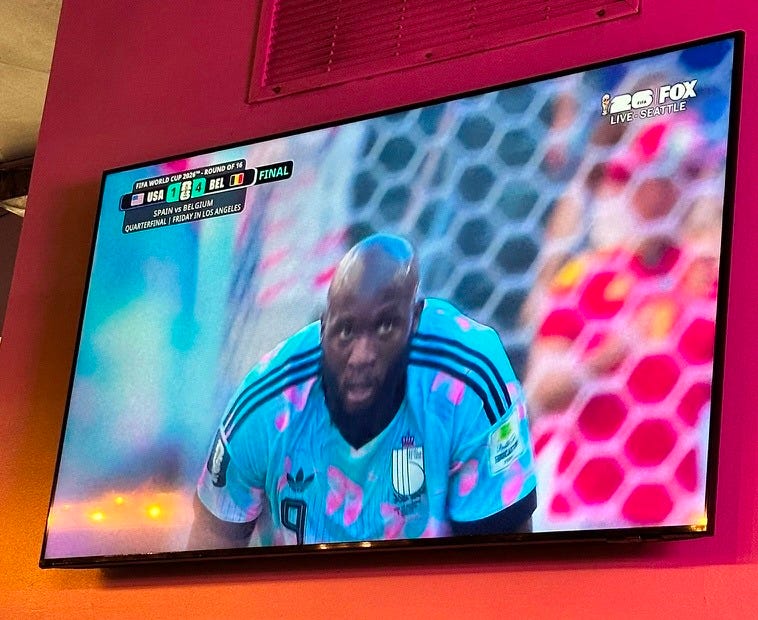
Soccer in the US and Canada to accelerate further? Mexico already has a rich history and passionate football culture, it’s a real shame more games were not played there, with none from the quarter final stages. It was never going to happen but the most befitting stadium for the final has to be the Azteca. Support for Mexico in the country and across North America showed how passionate they’re for their team and the sport and I hope this isn’t the last time they get to stage World Cup games. If this tournament cemented their passion and football culture, then for the other two hosts it remains to be seen what the long term impact is, but you could tell that they’re definitely growing their own soccer culture and fandom. At a grassroots level the pay to play model in the US is not the best way forward in the long-term, given it limits access to the wealthy only so things do need changing. Since they last hosted the World Cup in 94 they’ve come a long way and it was clear hearing from fans who have been into the sport for a while or were getting into it that things are growing and maturing out there. A new training centre in Atlanta opened in May where all 27 U.S. national teams will be catered for while the sport continues to be one of the fastest growing in Canada.
This wraps the Men’s World Cup coverage but stayed tuned for the next A Vivrant Field Report on New York basketball dropping next week and upcoming content around The Hundred, the Women’s World Cup and NBA Europe.
Heartwarming and fascinating. Wonderful to hear your stories on the ground in the US.